Firms that wait for AI to become “standard” will already be years behind the firms that made it standard.
By Akhil Krishnan B, Engineering Content Specialist

There is a pattern that repeats itself in every major engineering technology shift, and right now, we are watching it unfold in real time with artificial intelligence. The pattern is familiar. First, the technology is dismissed as a novelty. Then early adopters gain a measurable edge. Then it becomes an industry standard. Then, firms that waited spend years playing catch-up, not just on tools, but on processes, talent, and institutional knowledge. That gap has a name: technical debt. And engineering firms that are still on the sidelines of AI adoption in 2026 are accumulating it at a rate that will be difficult to reverse.
The numbers are already pointing in a single direction. According to the Bluebeam AEC Technology Outlook 2026, a global survey of over 1,000 AEC professionals, only 27% of firms currently use AI in their operations. Yet among firms already using AI, nearly all expect their use of the technology to continue growing. The window between early adopters and late followers is closing. The question is no longer whether AI will transform engineering workflows. That transformation is already underway. The question is whether your firm will be ahead of it or chasing it.
We Have Seen This Before
The engineering profession has a long history of resisting, then adopting, and then requiring new technology. Manual drafting gave way to CAD in the 1980s and 1990s. Firms that held onto drawing boards as a cost-saving measure eventually discovered that every client, contractor, and project partner had moved on without them. BIM followed the same arc. In the 2010s, it was a competitive differentiator. By the early 2020s, it was a procurement requirement on major public infrastructure contracts in the UK, Singapore, and across the EU.
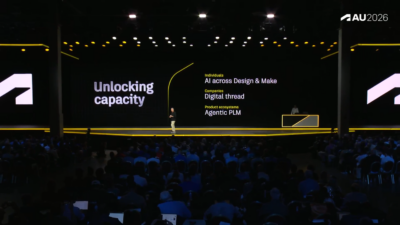
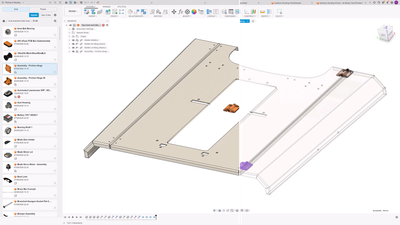
AI is moving through this same adoption curve, but at a faster pace. At Autodesk University 2025, Autodesk announced neural CAD, a new category of AI foundation models integrated into Fusion and Forma that the company says could automate 80 to 90 percent of routine design tasks, allowing professionals to redirect their attention toward creative and analytical decisions. Bentley Systems has embedded AI across infrastructure design, construction, and operations. Microsoft Copilot is now part of the document and specification workflow across hundreds of engineering organizations. The ecosystem is not standing still while firms deliberate.
What Engineers Are Already Using AI For
The practical applications of AI in engineering are not hypothetical. Firms that have integrated AI are using it across the delivery pipeline:
- CAD and drawing workflows: automated drafting, drawing extraction from legacy documentation, standards compliance checking, and automated dimensioning
- BIM and model coordination: AI-assisted clash detection, model validation, quantity takeoffs, and coordination reporting that previously required dedicated manual review cycles
- Infrastructure and operations: digital twin creation and predictive maintenance, with the digital twin market in construction reaching $64.9 billion in 2025 and projected to grow to $155 billion by 2030
- Document intelligence: specification review, submittal analysis, and drawing register management at a scale and speed that manual processes cannot match
- Project delivery: faster design iterations, reduced rework loops, and quality assurance that catches coordination conflicts before they reach the site
This is reflected in the work that engineering firms are now outsourcing. The routine, repeatable tasks that once consumed significant hours of senior engineering time are being offloaded faster than ever, not because firms are reducing headcount, but because they are redirecting talent toward work that requires engineering judgment.
What Early Adopters Are Already Achieving
The productivity case for AI-integrated workflows is no longer built on projections. A peer-reviewed study published in Discover Materials (Springer Nature, 2025), analyzing multiple BIM implementation case studies, found that structured AI-assisted coordination reduces project timelines by an average of 20% and costs by 15%, while decreasing design errors by 30% and requests for information by 25%. Clash detection alone, one of the most direct applications of AI in BIM workflows, has been shown to reduce design errors by 50 to 60%, clashes by 40%, and rework costs by 40 to 50% across documented project outcomes.
The Bluebeam survey quantifies the business case at the firm level: among firms that have adopted AI, 68% report saving at least $50,000, and nearly half have recovered 500-1,000 hours of project labor. These are not projected returns. They are reported outcomes from firms that have already made the transition.
A survey of global infrastructure firms conducted with Bentley, Pinsent Masons, Mott MacDonald, and Turner and Townsend found that AI adopters anticipate further improvements across design productivity, cost estimation, scheduling, and construction delivery. The AEC Hub 2025 technology research report draws a direct conclusion: the gap between AI-adopting and AI-resistant firms is already measurable, and it will widen as leading firms move from pilots to embedded workflows in 2026.
What Delaying Actually Costs
The concept of technical debt is well understood in software development. When teams take shortcuts to meet a deadline, those shortcuts accumulate into a structural liability. The codebase becomes harder to maintain and eventually impossible to build on without a costly rebuild. The same logic applies to operational capability in engineering firms.
A firm that delays AI adoption is not simply deferring a decision. It is accumulating a capability gap that compounds over time. While AI-integrated competitors refine their workflows and build institutional knowledge, the firm on the sidelines is falling behind in experience, data infrastructure, and process maturity. When it eventually adopts, it will not start where early adopters did. It will start years behind them.
A 2025 study from the IBM Institute for Business Value found that companies that ignored capability debt in AI initiatives saw project returns drop by 18 to 29 percent and timelines expand by up to 22 percent. The debt does not disappear when you finally decide to adopt. It arrives at the door with interest.
The Real Barriers, and Why They Do Not Justify Waiting
It would be inaccurate to characterize all hesitation as resistance. There are legitimate operational challenges that engineering firms encounter when evaluating AI adoption, and they deserve a direct acknowledgment.
Data quality is the most commonly cited obstacle. Across industries, more than half of organizations identify data quality and availability as their primary barriers to AI adoption, according to the PEX Report 2025. For engineering firms, this translates directly into inconsistent drawing naming conventions, fragmented project data, and legacy file structures that make it harder to train or configure AI tools effectively. Integration complexity and data privacy concerns follow closely behind.
Change management is another underestimated challenge. Most AEC firms lack the internal AI/ML expertise to build custom solutions, and generic platforms often fail when faced with AEC-specific data formats and workflow requirements, as documented by AEC AI practitioners. The result is a pattern familiar to many firms: pilot projects that demonstrate potential but stall before reaching production.
These barriers are real. But they argue for a structured adoption strategy rather than waiting. Firms that begin with targeted, well-defined use cases, such as automated drawing extraction, clash detection, or document review, build the data practices and internal expertise incrementally. Firms that wait inherit the same challenges, plus a larger gap to close against competitors who have been solving them for years.
What AI Still Cannot Do, and Why That Matters
A credible discussion of AI in engineering requires honesty about its limits. AI does not replace engineering judgment. It does not carry professional liability. It cannot assess constructability on a site it has never visited, read the unspoken constraints in a client brief, or make the kind of nuanced safety call that depends on a licensed engineer’s experience and accountability.
Bentley Systems makes this point directly. The deliberate pace of AI adoption in infrastructure is partly driven by regulatory requirements, professional engineer seals, and safety standards that cannot be automated away. Those constraints are real and appropriate.
What this means in practice is that AI adoption is about changing what engineers spend their time on, not reducing the number of engineers. The firms that get this right are not reducing their teams. They are redirecting them. Senior engineers spend less time on drawing reviews and standards checks and more time on decisions that require a senior engineer. That is not a threat to the profession. It is arguably the best version of what engineering has always aspired to be.
The New Engineering Workflow: AI-Augmented, Not AI-Replaced
The evidence from early adopters points toward a consistent pattern. Automated drawing extraction, AI-assisted BIM coordination, intelligent specification review, and generative design iteration are becoming baseline capabilities in firms that have made the transition. ACEC research shows that 78% of engineering firm leaders believe AI will positively impact their operations, yet most acknowledge they are not prepared for the speed of that change.
Firms that begin now will have years of embedded practice before AI-assisted workflows become a standard client expectation. That operational knowledge cannot be purchased off the shelf when the moment finally feels urgent.
How to Start Before It Becomes Obvious You Should Have
Every major technology transition in engineering has followed a similar pattern. There is a period when adoption appears optional, a period when it offers a competitive advantage, and eventually a period when it becomes a standard expectation. Firms that build lasting advantages are usually those that act before the transition becomes obvious.
For engineering leaders, the practical starting point is not a wholesale transformation. It is identifying one or two repeatable workflows where AI can improve efficiency, reduce errors, or free engineers to focus on higher-value work. Drawing extraction, clash detection, document review, and design coordination are all examples of contained use cases that allow firms to build experience without taking on unnecessary risk. The question is no longer whether AI will become part of engineering practice. The evidence suggests that the process is already underway. The more important question is how quickly firms can develop the capabilities, workflows, and institutional knowledge needed to remain competitive as that transition accelerates.
Akhil Krishnan B is an Engineering Content Specialist with 7+ years of experience writing for the engineering, BIM, and CAD industries. His work is grounded in primary research and direct engagement with engineers, delivering clear, technically sound content for a professional audience.
Sponsored content by IndiaCADworks