Autodesk’s user conference this week is previewing AI features for design and manufacturing, data management, and more.
As Autodesk University kicks off in Las Vegas, Nevada (September 15-17), Autodesk made a series of announcements for the three main markets it serves: architecture, engineering, and construction (AEC); media and entertainment (M&E); and design and manufacturing (D&M).
In the preshow briefing with industry press, Mike Haley, Senior VP of Autodesk Research, said the new technology and tools would deliver “a more human-centric experience” where “discovery is automated.” He expected they would “lower the barrier for a large number of people to use Autodesk tools.” He also promised “a standalone agent-first experience” to tackle “the workflows running between and around Autodesk products.”
In a company blog post, Autodesk CEO Andrew Anagnost wrote “Autodesk Assistant is our AI interface for Design and Make, bringing project intelligence into customers’ workflows so they can understand, plan, and act while staying in control.”
Autodesk revealed Autodesk Assistant will prioritize understanding what needs attention, taking action across workflows, and allowing users to incorporate data and intelligence into the agent via Agent Builder.
Read more ▷ AU 2026: Autodesk’s AI Assistant is evolving
As it has done for the past several years, Autodesk is showcasing its vision for AI-powered features at AU. This year, the company is spotlighting how the natural language-enabled Autodesk Assistant will become the ubiquitous entry point and interface for most software in its portfolio.
Design and Manufacturing
Autodesk products revolve around three industry clouds: Autodesk Forma for AEC, Autodesk Flow for M&E, and Autodesk Fusion for D&M. “Our three industry clouds, Forma, Fusion, and Flow, connect the people, data and workflows that make industries work. Autodesk Assistant is how we bring intelligence to customers today, and the next generation will extend that experience across products, projects and teams,” said Anagnost in a press release.
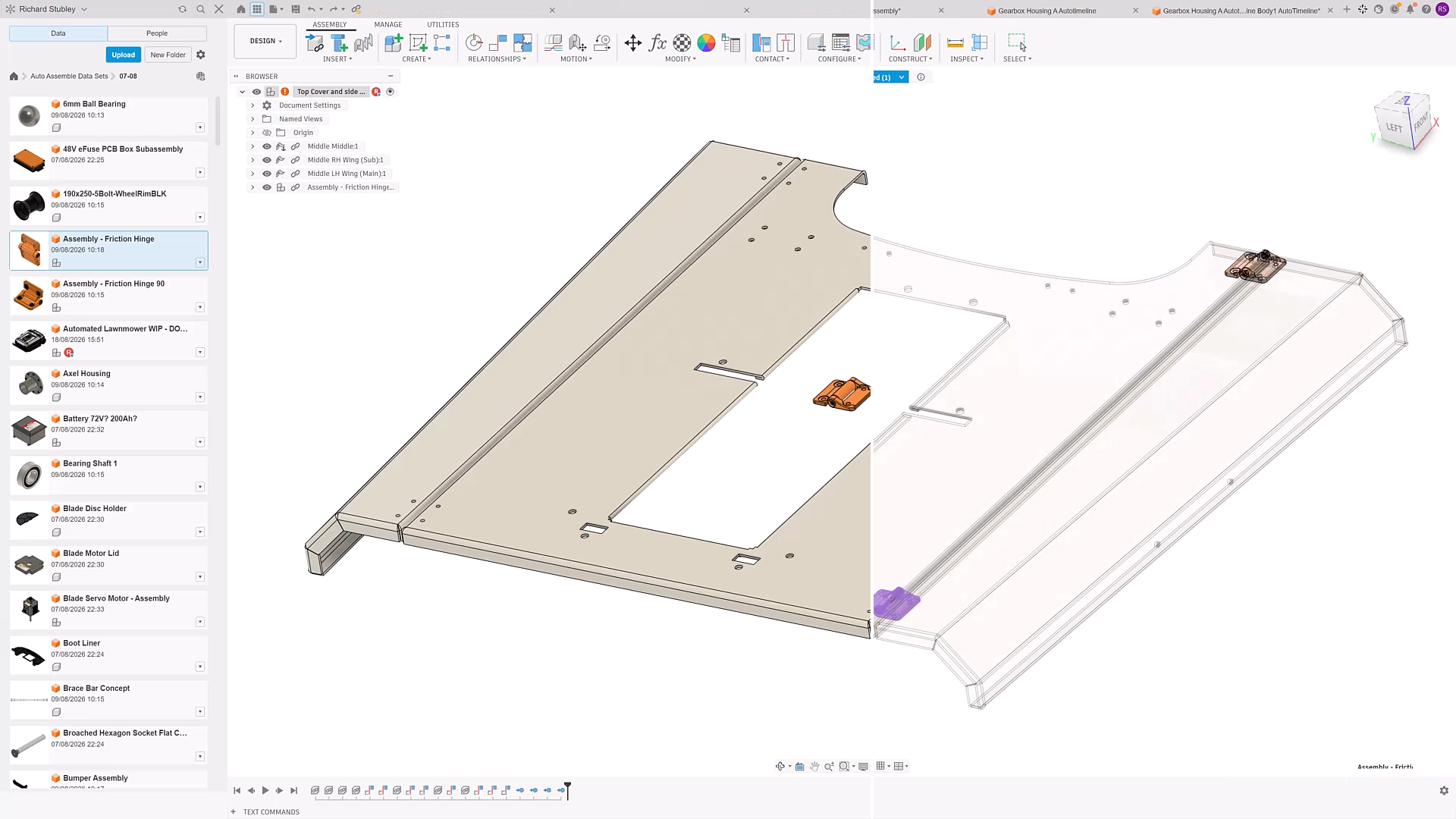
For D&M, Autodesk believes the first step is to use AI to automate repetitive, time-consuming tasks. Accordingly, Autodesk announced at AU that it plans to use AI to add AutoConstrain and AutoTimeline to imported geometry, which converts them into editable parametric parts. Srinath Jonnalagadda, Autodesk’s VP of data solutions for D&M, described the process as “reverse-engineering the recipe for the geometry.”
In addition, AI will enable AutoAssemble to partially automate the assembly process and System Modeler to automate machine setup, toolpath generation, and production preparation.
At the conference, Autodesk highlighted the Kannapolis, North Carolina-based Haas Factory Team’s use of Autodesk Fusion to prepare for the Nascar O’Reilly Auto Parts Series in 2027.
“[A] last-minute request to machine a part or figure out how to manufacture new projects with Fusion, from new power-steering or oil filter brackets to a fuel pickup piece, steering column brackets, steering rack spacers, and more,” was a common occurrence, according to Autodesk’s blog post.
The team’s switch from Ford to Chevrolet last year generated the need for a massive number of new parts. “With the volume of net new jobs and parts we’ve created since the beginning of the year, Fusion has played a significant role in helping us achieve our goals,” according to Haas’s machine shop manager Justin Cook in the blog.
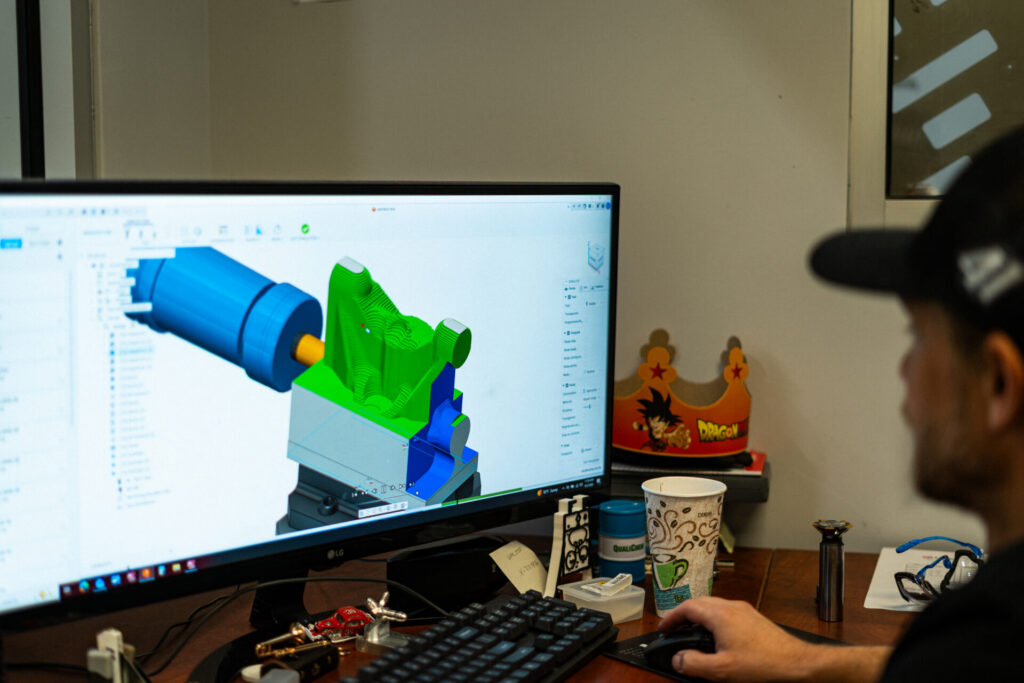
“Having one model to work from makes everything easier,” Cook added. “You can manage multiple setups, create and control soft jaws, save your NC files, and keep everything organized in one place. The workflow with Fusion is really nice.”
Data management
At AU, Autodesk is promoting what it calls “an agentic PLM experience.” The strategy is to make PLM much more intuitive, adaptive, connected, and intelligent. “Agentic AI reasons over product and workflow context to predict impact, coordinate work, and drive the next action, not simply answer questions,” according to Autodesk’s Christa Prokos in a blog post on agentic PLM.
For project and data management, Autodesk Assistant will use Autodesk Inventor’s APIs and iLogic to analyze models, modify parameters and components, and create model states. Autodesk Vault users will be able to use Autodesk Assistant to search across existing data using natural language.
Autodesk revealed that Inventor will become the first Fusion Connected Client, making what was historically a desktop design program into a cloud-connected product with instant access to PLM.
“When released, the new Fusion Manage experience will be designed to help teams spend less time searching for information, navigating systems, and coordinating work manually. Instead, they can focus on understanding what matters, making informed decisions faster and moving product development forward,” Prokos wrote.
Autodesk Assistant is already available in mainstream software titles in the D&M portfolio. At AU, the company is previewing the new features powered by AI. The rollout schedule is expected to come in 2027.