Why does approving a routine design tweak require so much detective work?
Autodesk has sponsored this post.
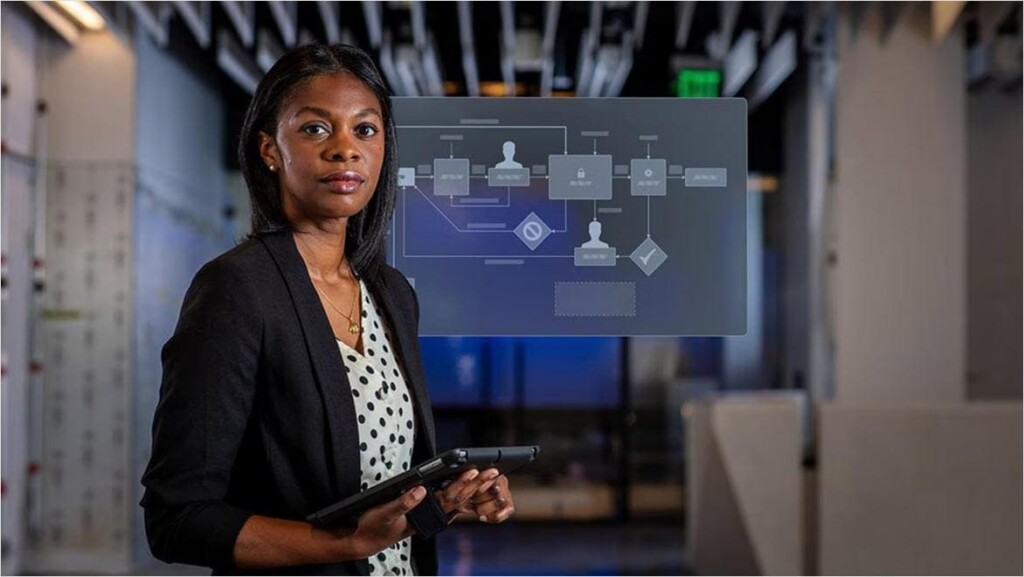
An engineering change order (ECO) can clear every formal approval and still be obsolete before it reaches the shop floor.
Consider a standard revision to a bracket. An engineer adjusts the fillet radius of a bracket in CAD, then opens a separate system to document the work. That system may be a PLM tool, a spreadsheet or an email chain. The engineer enters the details again and attaches an exported drawing.
The design and the ECO now begin moving at different speeds. If another tweak is needed after the ECO is created, the CAD data changes while the ECO continues through its approval workflow. A teammate may open an older assembly version. A reviewer may approve a stale snapshot. Manufacturing may begin work from a record that was accurate only when it was exported.
“In this case, the divergence is not an error. It is a system architecture problem,” says Amitabh Verma, principal product manager at Autodesk. “There are two systems, and each one tells a different story. Somebody has to pay that reconciliation tax every time as they go along.”
Reviewers have to open the CAD file, check line items one by one against the ECO metadata, verify version numbers and confirm that the attached drawing still matches the current model. The revised radius has to be validated by hand—and in some cases, the reviewer has to track down the person who made the last edit on the design.
“It’s a lot of manual effort,” Verma says. “The likelihood of making a mistake is much higher.”
Because the change record holds a snapshot with no live connection back to the CAD data, traceability gaps creep in. Keeping the two systems aligned requires continuous human sync, creating friction and overload for reviewers. When that alignment slips, the cost surfaces downstream as rework, scrap and overtime.
“If you are designing a bracket or a couple of screws, it probably can work,” says Verma. “But as you scale as a business, your complexity grows, the number of people in the organization grows, and it becomes harder to manage.”
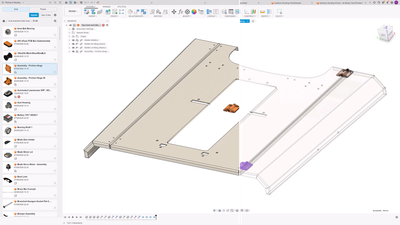
When tools like Autodesk Fusion Manage are used in conjunction with Fusion, engineers no longer have to export a file and attach it to an ECO in a separate system.
“In the connected workflow, an ECO isn’t just describing the change,” Verma says. “It is actually referencing the live design. They are in the same system — the design is linked directly into the ECO, not attached as a file.”
A work-in-progress design can be included while the change is being developed. Once the ECO reaches review, its contents can be locked so that nobody makes further changes to the design.
When the ECO is released, the team sees the same lifecycle state. Fusion and Fusion Manage maintain CAD revision history alongside the PLM change record, which shares the same underlying structure. Reviewers have the current information associated with the ECO—so they’re not comparing a live CAD model against a PDF attached three days earlier.
“Because it’s embedded within the same system and not integrated, there is no connector, no sync job to maintain,” explains Verma. “That’s where the connected workflow fares far better than anything which would be manual or in two different systems. Those two systems might be really good in their own right, but when transferring and syncing things between the systems, they can fail silently.”
No longer do engineers have to follow up with “Did you get my email?” or “Did you approve this?” Managers can trace who did what in the audit trail. New people joining the team inherit a structured system instead of having to ask around to find out which version is current.
“Once you go from spreadsheets and emails to a system, it is a complete game changer,” says Verma. “It can help you if the company is growing, if you’re getting into more designs, more products. It changes the ratio of time your engineers spend on judgment work versus reconciliation work.”
And teams are freed up to focus on actual innovation.
One example is the kitchen appliance manufacturer Made by Gather, which put Autodesk Fusion Manage to work in their processes and saw significant productivity gains from centralized data and streamlined workflows. “It improved our efficiency 4X, so that gives us the implied profitability and everything else because we’re able to handle that much more projects,” says TJ Ward, engineering lab manager at Made by Gather.
“This is about human capital as well,” concludes Verma. “Your best people don’t have to waste their time doing reconciliation checks or audits. The system can do that. Your experts can do something much better than going between two systems, typing out things manually, and trying to reconcile data across systems.”
To learn more, visit Autodesk.