By Royston Jones, PhD, Global Head of Automotive & Transportation, Siemens Digital Industries Software
In modern racing, winning and climbing to the top podium depends as much on precision digital engineering as it does on raw speed. Turnarounds are tight when racing week to week, giving teams just a few days to build, upgrade or redesign a working car containing thousands of unique parts and be ready by the weekend to best dozens of competitors.
As a result, engineers have become experts in acquiring data about vehicle and part performance to better inform engineering decisions. Every moment from the wind tunnel to the track itself contains insights that can lead to greater innovations down the line, and engineers have been utilizing the latest advancements in technology to make those insights visible and accessible to their teams.
Acquiring such data, however, is only the first step. Leveraging the full potential out of a vehicle’s data also requires the right tools to make sure that data is traceable and accessible, ensuring insights can be quickly surfaced to the engineer.
That is why the racing world has been relying on and advancing efforts in digitalization of their engineering processes. With tools such as the comprehensive Digital Twin and industrial artificial intelligence (AI), racing engineers are able to maximize the output of their data and get incredible machines roaring out onto the track as fast as possible. Not only do these efforts transform the realm of racing, but they also show how the same efforts can be used to revolutionize the wider automotive industry and beyond.
The data in everything
As with every product development, having the right data on hand when one needs it is key to making decisions that lead to the best possible outcome. The biggest obstacle, of course, is finding that data in the first place. This issue is especially pronounced in a field such as motorsports, where the time for physical tests, simulations and data analysis is incredibly short if engineers want their best car on the track every week.
Yet it is precisely these time constraints that have made racing engineers masters at acquiring vital data across the lifecycles of their vehicles to be used in engineering decisions. Innovation loves constraint, after all. Much of this is due to their adoption of digital technologies and systems, such as onboard sensors, which can monitor vehicles and components in real-time. Whether the car is performing aerodynamics tests in a wind tunnel or actively racing on a track, these sensors and systems are able to feed engineers immediate, accurate data right to their screen.
Having such accurate data on hand grants engineers better insights into how their car and its components work under a multitude of conditions, enabling them to make the car perform even better for the next race.
Bridging teams and data with the Digital Twin
As mentioned before, however, these race cars house thousands of individual parts, each containing several interactions between each other. That can result in a large volume of data being generated, dozens of terabytes, even. When engineers must already perform numerous part swaps and design improvements across the season, trying to find or trace the right data can lead to delays that risk forfeiting a race. Without the right tools or processes to sort through and connect data in place, this data can quickly become very unwieldy for engineering teams.
This is why many racing teams turn to the comprehensive Digital Twin. As the virtual model of a physical product, process or system across its lifecycle, the comprehensive Digital Twin connects domains and tools to enhance data continuity across all stakeholders and bridge together teams in design, manufacturing, simulation and more. In short, it brings together data from different aspects of the vehicle, whether it is mechanical, electrical, thermal, etc., as a single source of truth for an entire racing team to access and utilize.
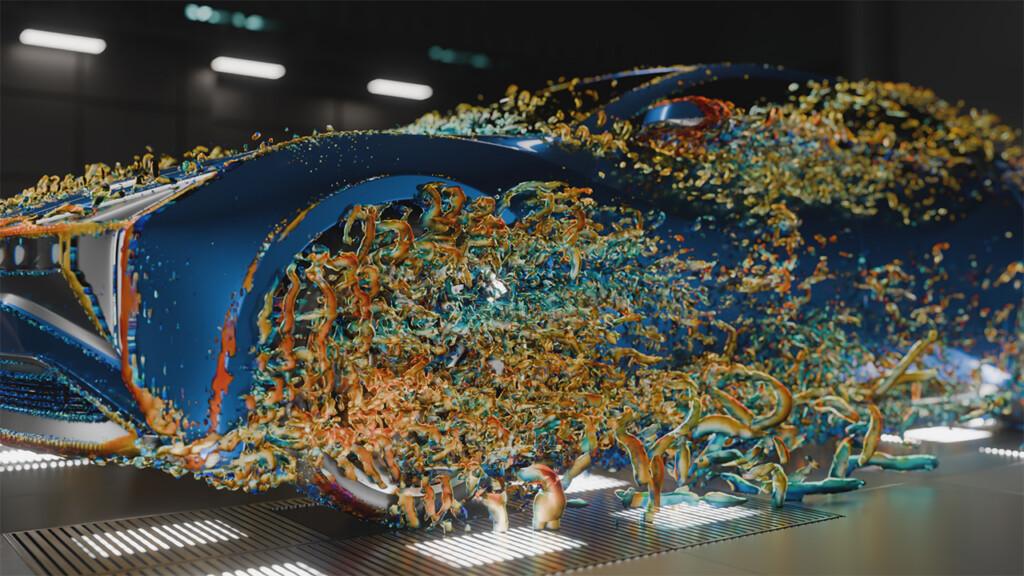
What is more, the Digital Twin also enables high-fidelity simulation of anything from individual parts to larger systems, to help optimize their real-world counterparts. With fresh data straight from the track, the accuracy of these simulations is substantially increased, capable of simulating up to a tenth of a second on a track.
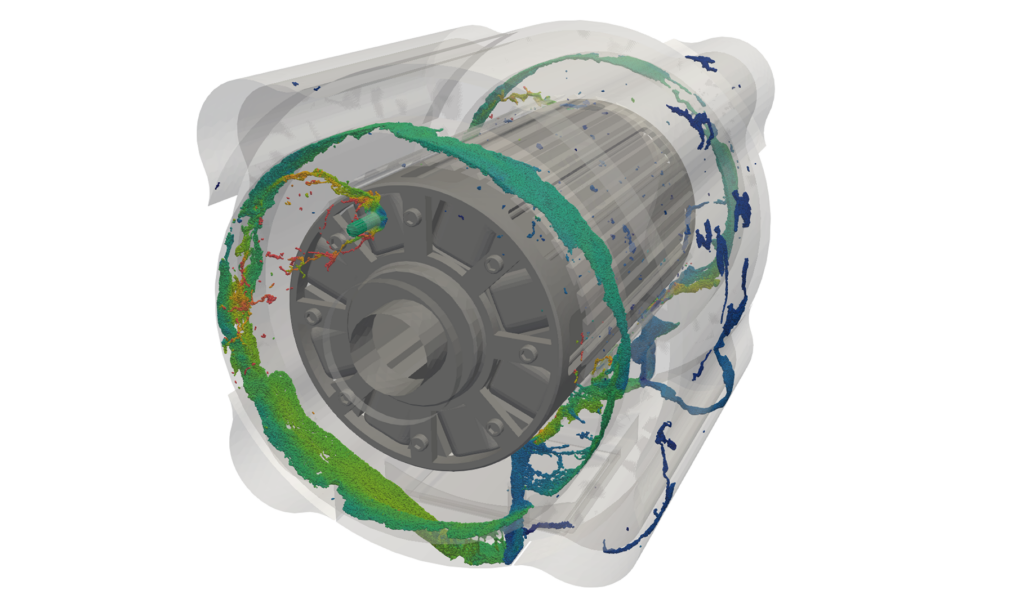
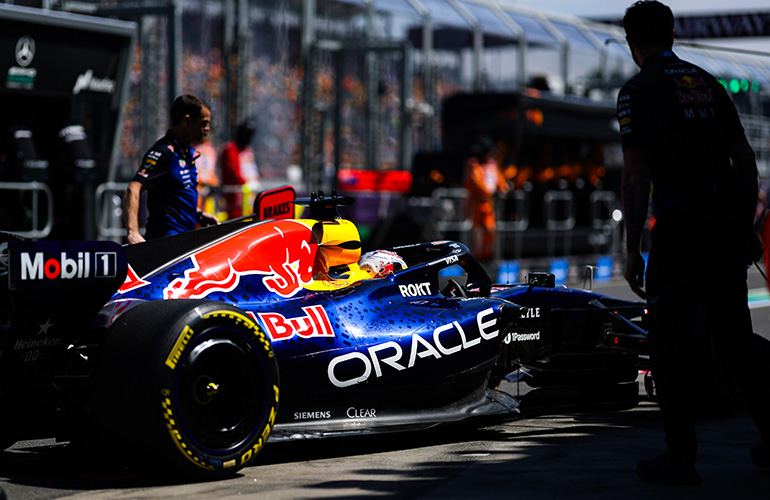
Such simulations can deliver engineers even better insights and rapidly accelerate design iterations. For example, with simulations from the comprehensive Digital Twin, Oracle Red Bull Racing achieved a 300 percent improvement in part design cycle time and made aerodynamic design iterations 1,000 percent quicker per iteration, while cutting approval of design changes from weeks to mere hours.
Managing data with industrial AI
Another technology helping the racing world utilize the full force of data is industrial AI. Differing from the generative AI typically portrayed in the public mind, industrial AI is integrated into engineering models and automated systems to enhance data analysis and ensure safety and reliability in its recommendations. It is AI meant to be used for the express purpose of engineering, while keeping data secure and in-house.
Industrial AI excels at disseminating vast quantities of information and putting it in one place for engineers to use. It is also capable of analyzing said data at rapid speeds and highlighting key insights most pertinent to engineers’ needs. For example, it can take the data gathered from simulations, wind tunnels and sensors onboard cars to perform predictive analytics and identify component fatigue or reliability issues before they occur, giving engineers more time to fix these issues.
Driving industries forward
Modern racing has become a blueprint for how organizations across industries can connect the physical and digital worlds, using real-world performance data to continuously improve virtual models, and accelerate the speed of product development and predict and optimize real-world outcomes.
The same combination of the comprehensive Digital Twin and industrial AI that helps racing teams gain a competitive advantage is helping automotive manufacturers develop software-defined vehicles faster, aerospace companies validate increasingly complex systems and manufacturers optimize operations while reducing cost, risk and waste. As products become more connected, software-driven and data-intensive, the ability to rapidly transform data into actionable insights is becoming a core competitive differentiator across industries — not just on the racetrack.
The lessons learned in motorsports today are helping shape the next generation of vehicles, products, factories and industrial systems, proving that the future of innovation belongs to organizations that can move at the speed of data. Today’s race teams aren’t just competing for podiums — they are pioneering the digital twin and industrial AI strategies that will define the future of engineering across every industry.
To learn more about Siemens and the digital innovation happening in motorsports, visit: Motorsports | Siemens
About the Author:

Royston Jones, PhD, is the Global Head of Automotive & Transportation for Siemens Digital Industries Software. Dr. Jones previously served as both the CTO of Product Design and Senior Vice President of the Global Automotive Vertical for Altair prior to its acquisition by Siemens.
For over 40 years, Jones has been helping customers drive innovation into their products and processes through simulation, optimization and, more recently, AI. He also has been instrumental in the development of cutting-edge solutions for automotive, including methodologies to reduce vehicle weight (‘C123Process’) and optimize battery pack performance whilst significantly reducing design time.
Jones holds a Ph.D., M.Sc. and B.Sc. in civil engineering from Swansea University as well an honorary professorship in its School of Engineering.
Sponsored Content by Siemens Digital Industries Software