Attendees explored the latest version of the multiphysics simulation software and learned how engineers are using it.
Engineers and scientists gathered in Burlington, Massachusetts last month to discuss Comsol Multiphysics simulation software and what to expect from Comsol version 2027. Comsol Conference 2026, which ran from October 7 – 9, consisted of keynote addresses, one-hour mini courses, application posters, and exhibits from Comsol partners.
In a popular mini course, Comsol’s Bjorn Sjodin introduced Comsol 2027. The new release includes new modules, features, and AI capabilities.
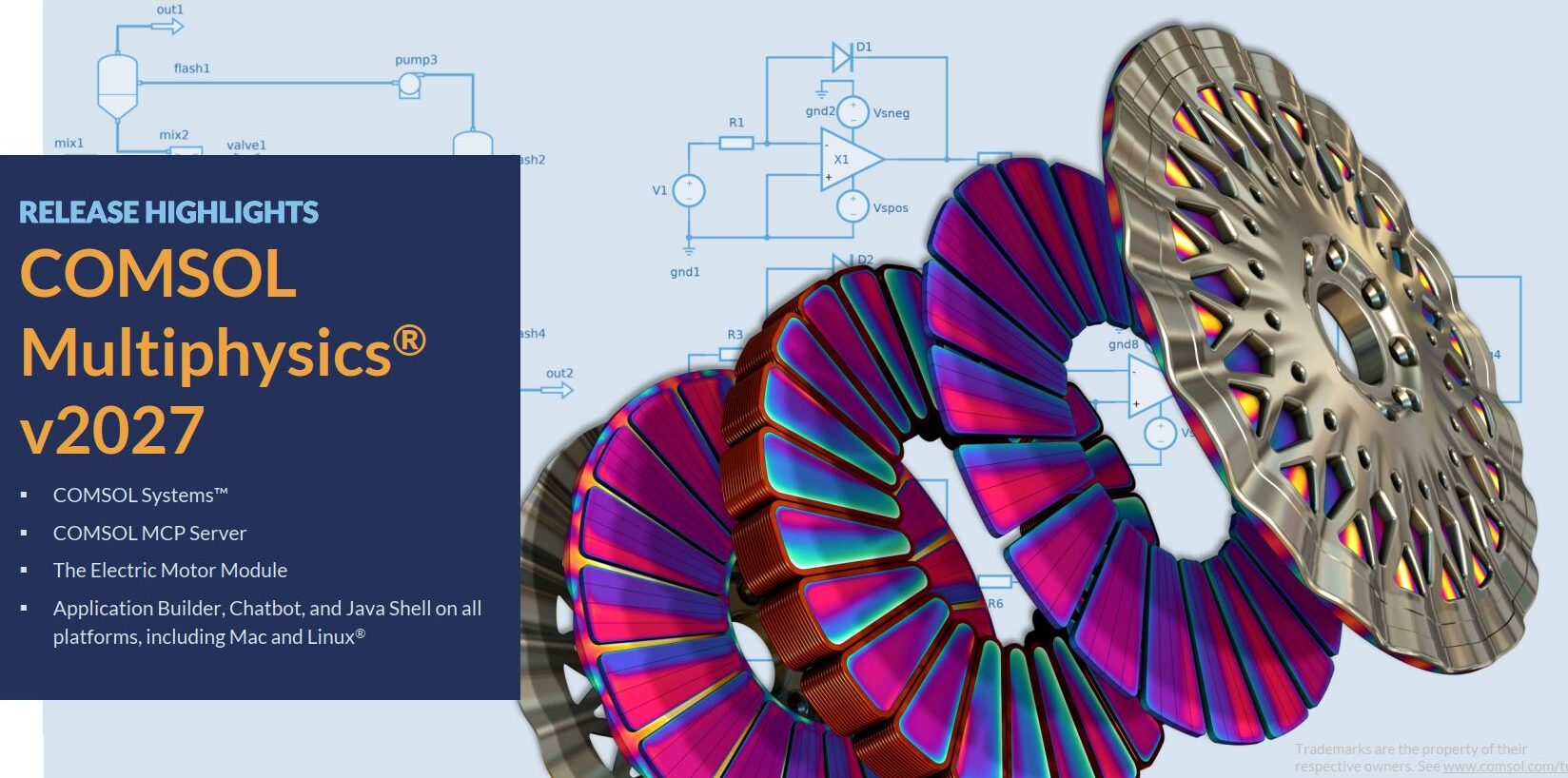
Comsol Systems brings together Comsol’s Electrical Circuit, Flowsheet, and Generic System through interfaces. An electrical component library includes 5000 models of components such as op amps, capacitors, resistors, and transistors. Engineers can import SPICE models to bring more components into the library.
The Flowsheet Interface covers chemical processes. The Generic Systems Interface lets engineers and scientists define blocks and equations where they can perform finite element analysis.
Comsol’s MCP server connects AI Agents so that scientists and engineers can use them to develop solutions to problems by creating models, processes, and equations.
The Electric Motor Module lets users model motors and create efficiency maps. Its time-periodic solver can find when a motor reaches steady state.
Comsol 2027 brings the software’s chatbots, Application Builder, and Java Shell to Mac and Linux versions (they were already available on Windows).
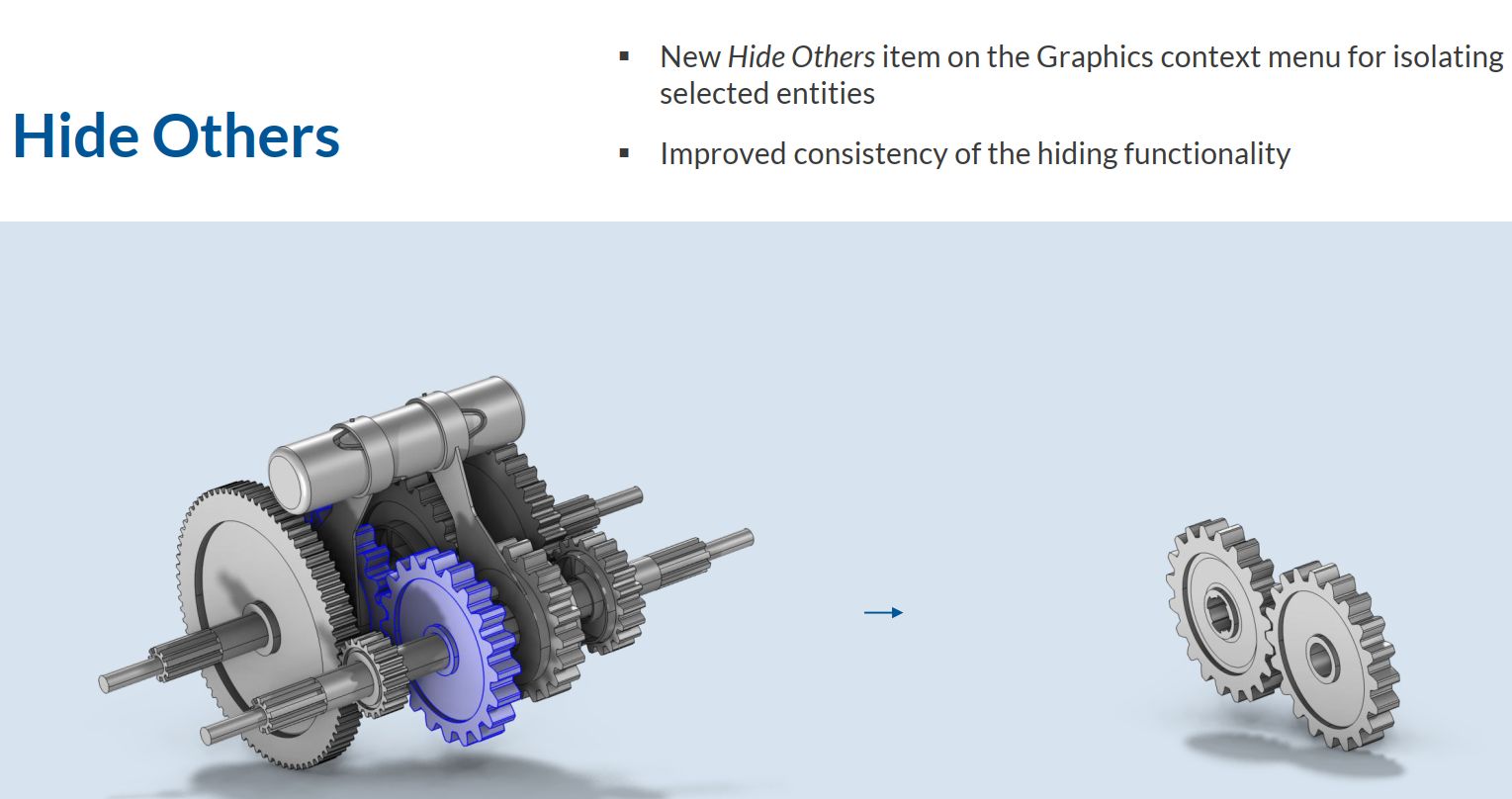
Comsol 2027 also includes a host of other new features. One such feature declutters diagrams, letting users see some details while hiding others from view but not from the models themselves. For example, a line or curve may consist of many data points. If you’re not interested in seeing every data point, Comsol 2027 can remove them, producing a smooth curve from one that shows discrete data points. Another feature hides parts of a system model, letting you see only those components of interest.
Keynote address: Agentic AI
While the conference included several keynotes, I attended one Called Agentic AI for Industrial Simulation: Real-World Workflows, presented by Rui Aguiar, CEO of Cosmon. I also spoke with Aguiar prior to his presentation.
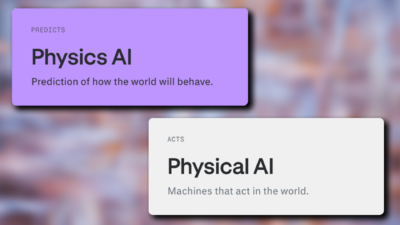
Cosmon’s product, called Argus, works with Comsol and other platforms to help engineers and scientists develop simulations based on a set of goals and parameters. Aguiar sees two major categories of AI usage in the simulation workflow: physical AI and agentic AI. By “physical AI,” Aguiar referred to using data to find patterns that would take humans a long time to find, if at all. Agentic AI uses computing power to develop the processes that simulate a system. It can then find out why a simulation might diverge from a real-world situation and make adjustments to the model.
Simulations require a person’s domain knowledge to specify to AI its simulation goal based on physical limitations and boundary conditions of a system and its components. As Aguiar noted, “For specific use cases, units, tolerances, materials, and standards have to be encoded and grounded in the model.” He said that without proper boundary conditions, you can end up with hallucinations. He emphasized that engineers must state a simulation’s objectives.
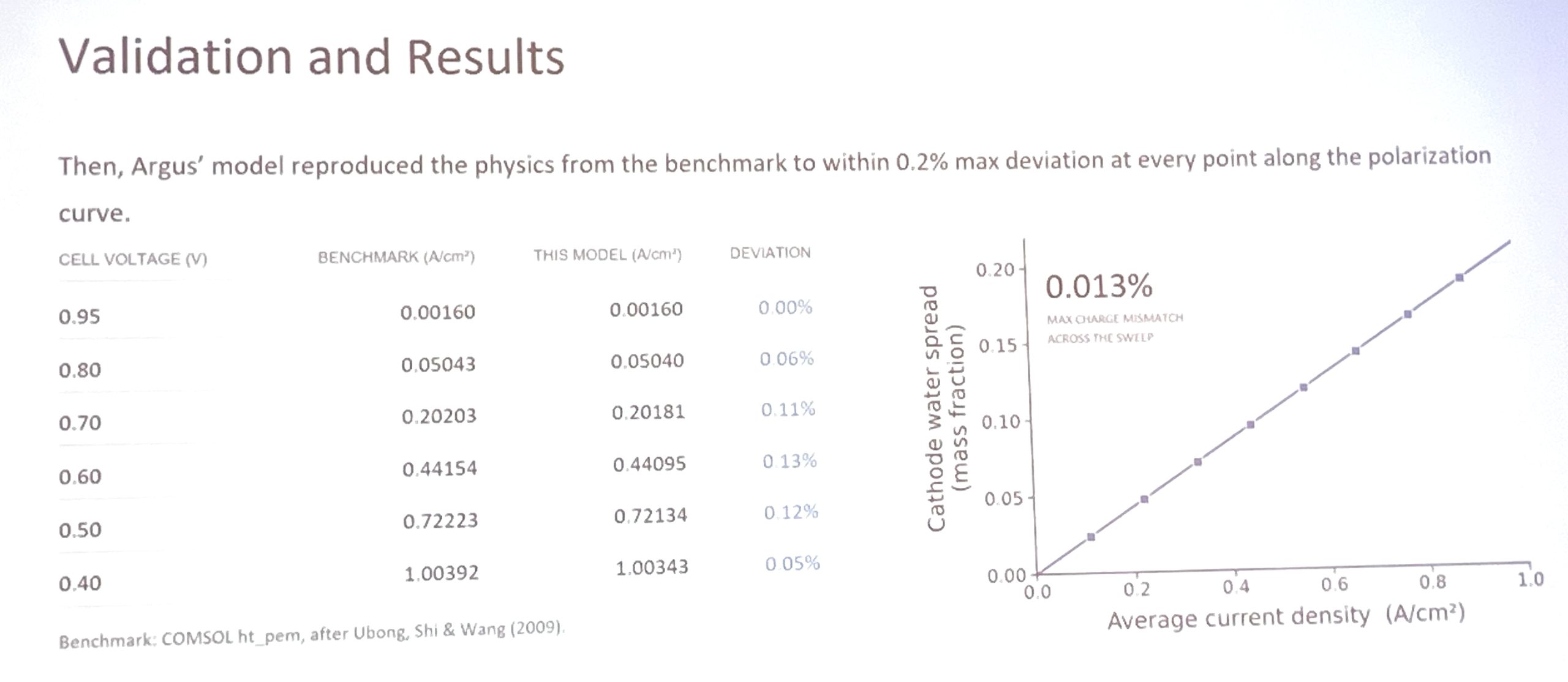
“Your agent or our tool is going to propose physics, models, solver strategy, and reasoning,” Aguiar told the audience. Aguiar also stressed the importance of validating any and all results that AI might produce. That validation is possible only with a person’s technical knowledge. Aguiar showed how he used agentic AI to develop a model with 0.2% deviation from a measured result (see below image).
Keynote address: Hypersonic Inflatable Aerodynamic Decelerator
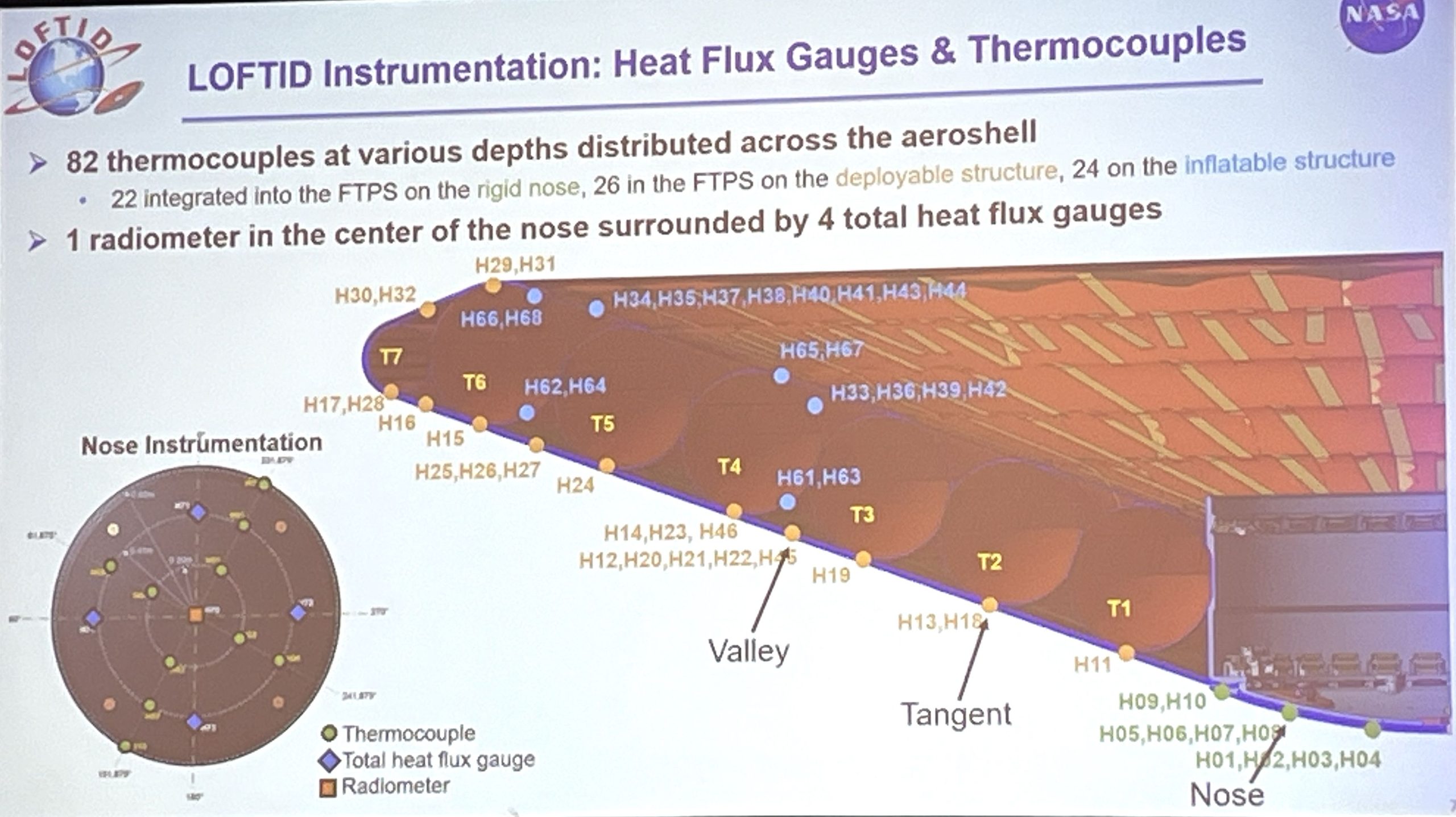
In another keynote, Hannah Alper from NASA showed how engineers used Comsol Multiphysics to simulate the performance of an inflatable decelerator/heat shield for spacecraft at it enters Earth’s atmosphere. The models used flight data for the simulation. The decelerator used a network of 82 thermocouples to measure temperature at several depths. From those measurements, engineers created a polynomial and solved for heat flux, from which they can simulate temperature gradients in the material. The below imageshows the locations of the thermocouples.
Mini courses
In the mini courses, Comsol engineers explained how to simulate mechanical, electrical, and chemical systems.
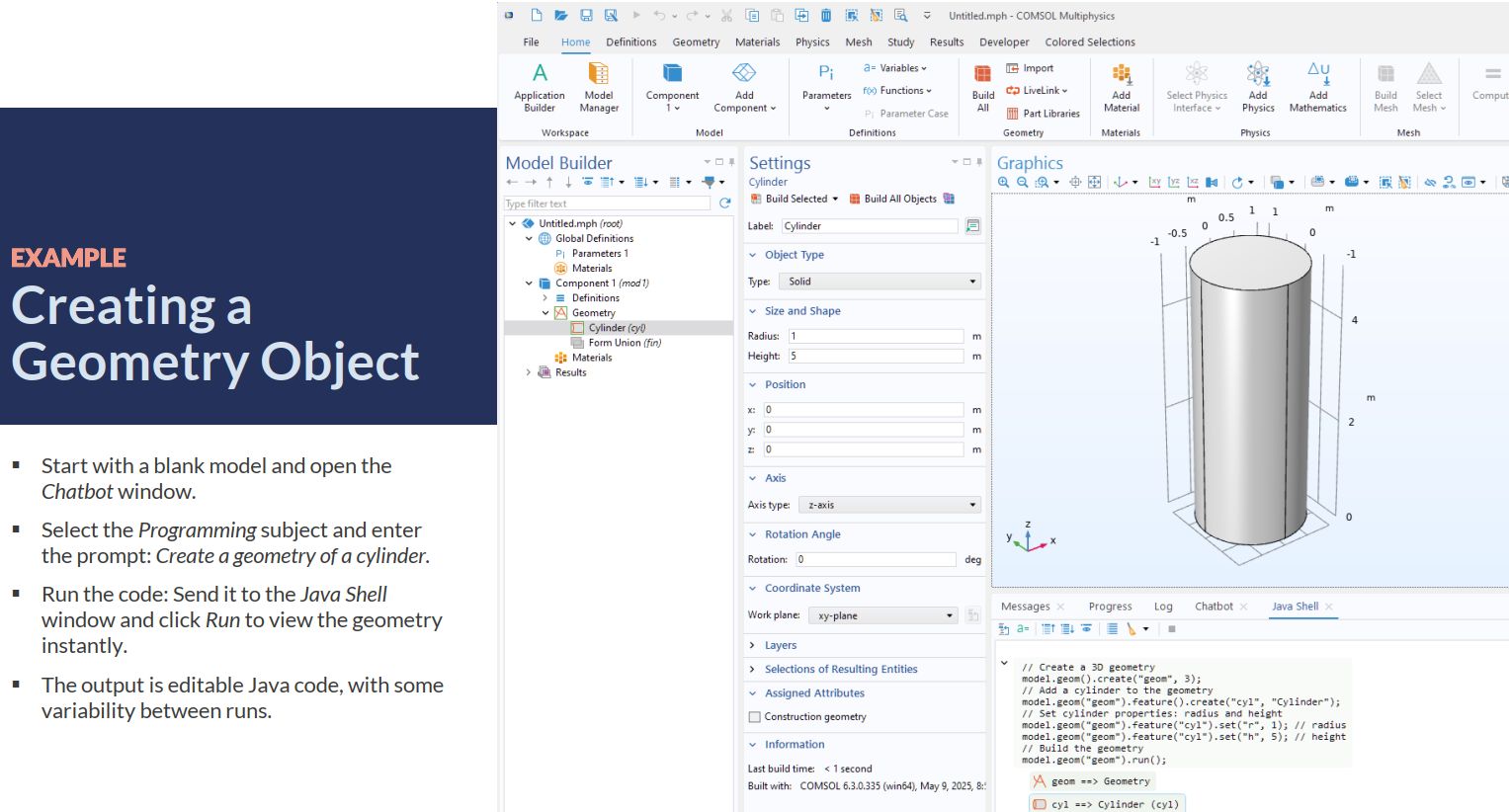
In “Generative and Agentic AI with Comsol,” Jada Walter discussed using two types of AI with Comsol to simulate a cylinder. Walter showed how to use features such as a chatbot, model builder, and Comsol’s MCP server to not only create a model, but debug it as well. He explained that users can have AI agents look for errors in the reasoning behind the model, not just its code syntax.
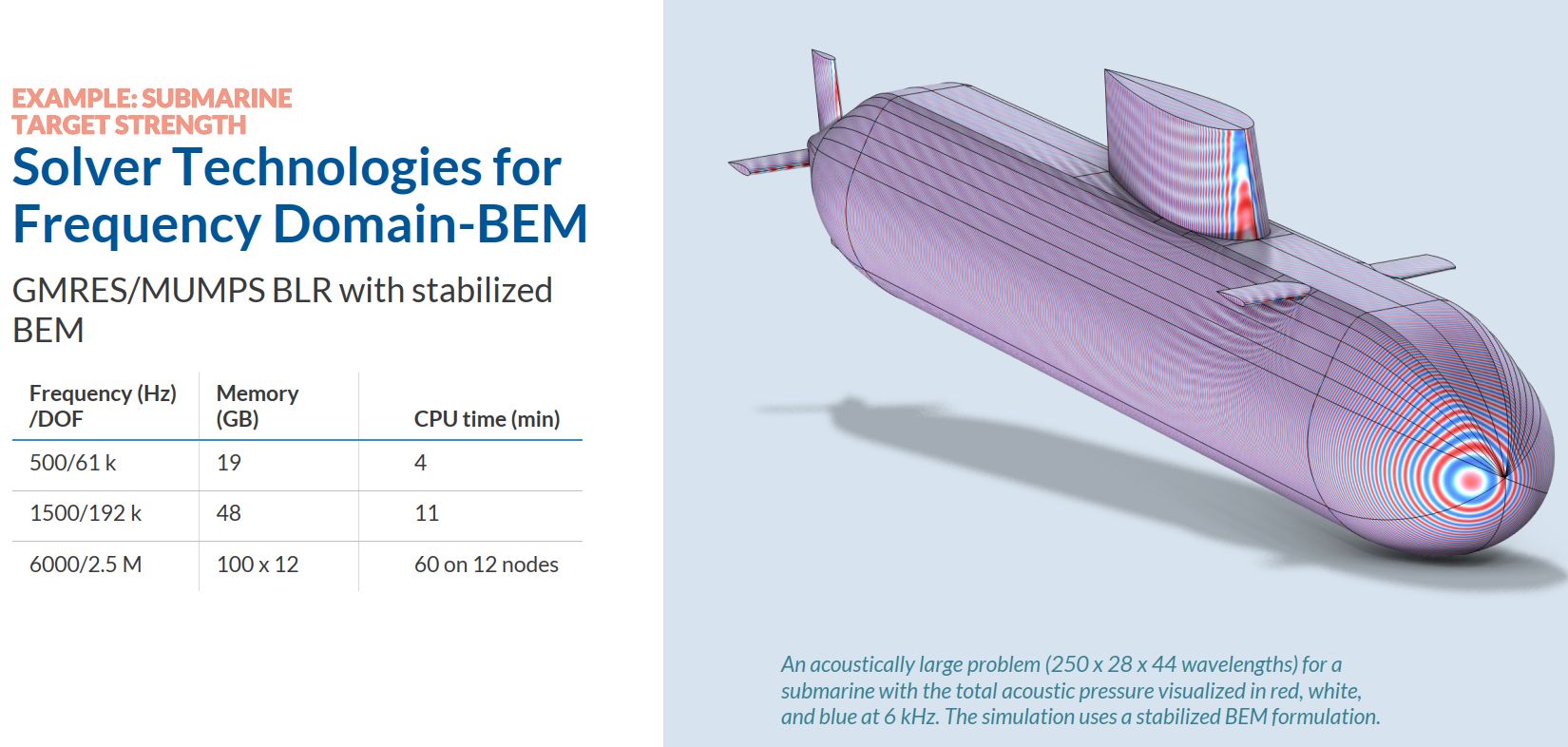
In “Solving Large Models,” Jacob Yström explained how to use solvers to create simulations in acoustics, airflow, and liquid flow in the time domain and frequency domain. The below image shows a model of submarine target strength. The model is based on acoustic pressure.
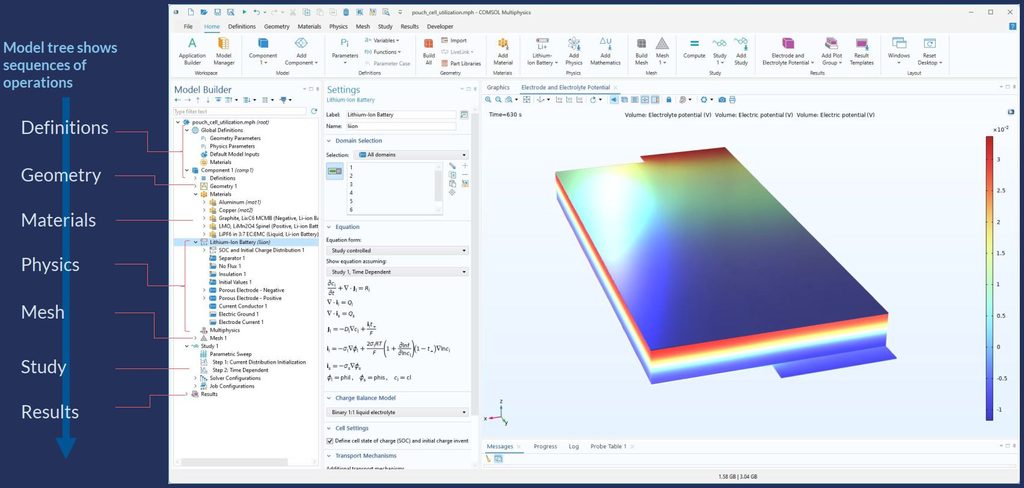
Batteries are an essential part of life and engineers who develop them need simulation. In “Battery Design,” Chen You demonstrated how to use Comsol’s battery design module to simulate several kinds of battery structures, geometries, and chemistries. The below image shows the steps needed to simulate a lithium-ion battery.
Posters show simulation applications
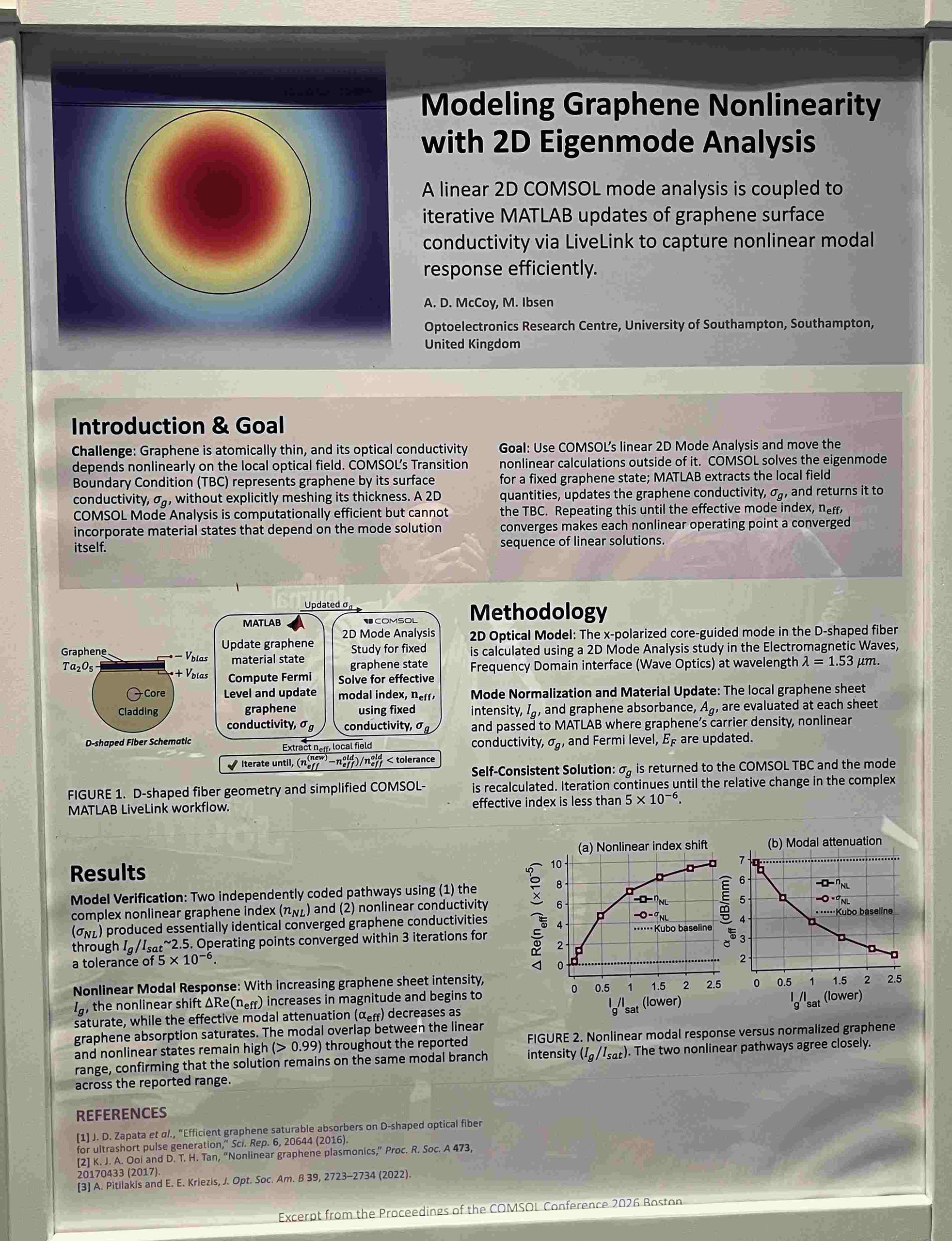
In the exhibit hall, conference attendees could review posters of how engineers use Comsol to simulate objects and systems. The poster below shows how engineers used Comsol and Matlab together to model nonlinearity in graphene.
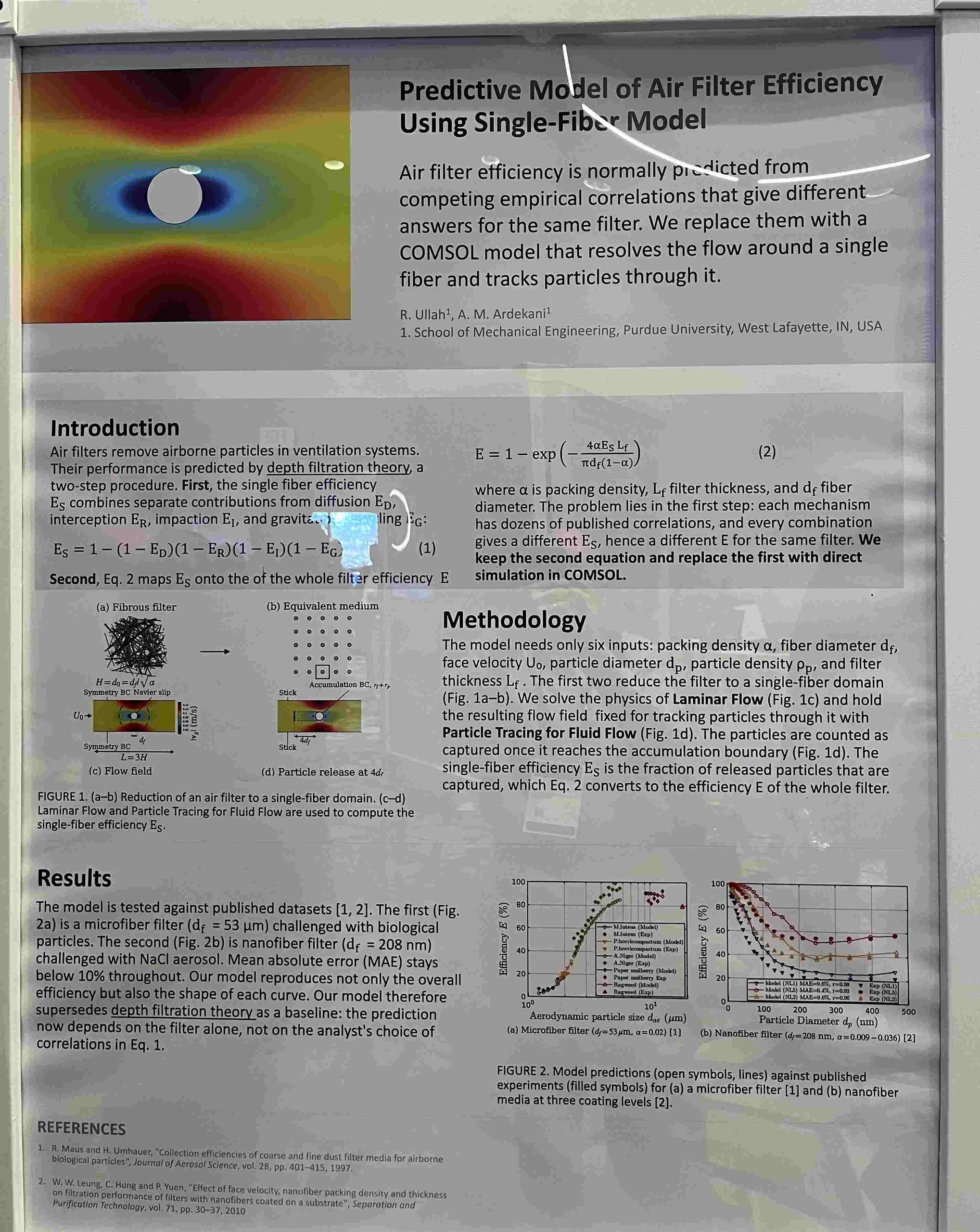
Another poster shows a model for using simulation to predict efficiency in air filters. The authors, from the Purdue University School of Mechanical Engineering, modeled the filter using packing density, fiber diameter, face velocity, particle diameter, particle density, and filter thickness.
The 2027 Boston Comsol Conference will take place in the City of Boston Seaport District. Speaking as a Bostonian, the Seaport is a more attractive location for attendees coming from out of town.