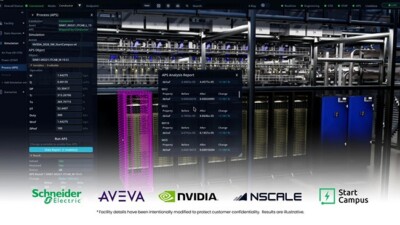
The model-based approach supports power, cooling and infrastructure validation before construction of NVIDIA DSX AI factories.
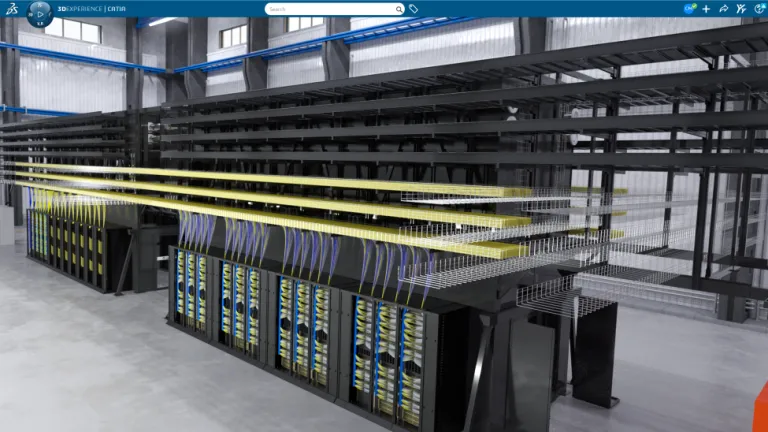
Dassault Systèmes and Vertiv Holdings Co. announced a collaboration to support the configuration, simulation and validation of AI factory infrastructure before construction begins. The collaboration combines Dassault Systèmes’ 3DEXPERIENCE agentic platform with Vertiv’s digital infrastructure expertise to support the design of NVIDIA DSX AI factories.
The collaboration builds on Vertiv SmartRun configurable virtual twin technology and extends the model-based approach to additional Vertiv AI factory infrastructure solutions including Vertiv OneCore. Dassault Systèmes’ 3DEXPERIENCE platform provides systems engineering, simulation and virtual twin capabilities for configuring and validating Vertiv’s SimReady power and cooling reference designs for AI factories based on the NVIDIA Vera Rubin DSX AI Factory reference design and NVIDIA Omniverse DSX Blueprint.
AI factories integrate power, cooling, networking, controls and computing systems. Because changes in one area can affect other areas, engineers need to evaluate the performance of the complete infrastructure system before construction and deployment.
Vertiv OneCore is a hybrid-built data center solution that integrates power, thermal management and related infrastructure. The 3DEXPERIENCE platform’s model-based systems engineering, simulation and virtual twin capabilities can represent Vertiv infrastructure as an integrated digital system and provide traceability into the effects of design changes.
Using the 3DEXPERIENCE platform, Vertiv SimReady power and cooling assets can be configured as system models for customer-specific AI factory designs based on the NVIDIA Vera Rubin DSX AI Factory reference design and NVIDIA Omniverse DSX Blueprint. Engineers can use the models to evaluate configurations, apply design changes across disciplines, conduct system-level and multiphysics validation and generate engineering deliverables from a common environment.
The companies intend for this approach to support configurable AI factory infrastructure that can be co-designed and validated throughout the project lifecycle. It is also intended to preserve design information from initial configuration through construction, commissioning and future technology upgrades.
The companies identify several potential outcomes, including reducing the time from requirements definition to a configured and validated AI factory solution by up to 10 times and reducing the defined infrastructure deployment period by up to 50%. Based on Vertiv’s model and its stated assumptions, the approach could bring capacity online approximately 10 weeks earlier than the modeled conventional baseline and produce up to 30% more cumulative token output within 12 months of project kickoff at the same installed capacity. These figures are attributed solely to earlier facility readiness and do not represent improved operating efficiency or a measured customer result.
For more information, visit 3ds.com.