What if simulation could actively guide the best design decisions from day one?
Siemens has sponsored this post.
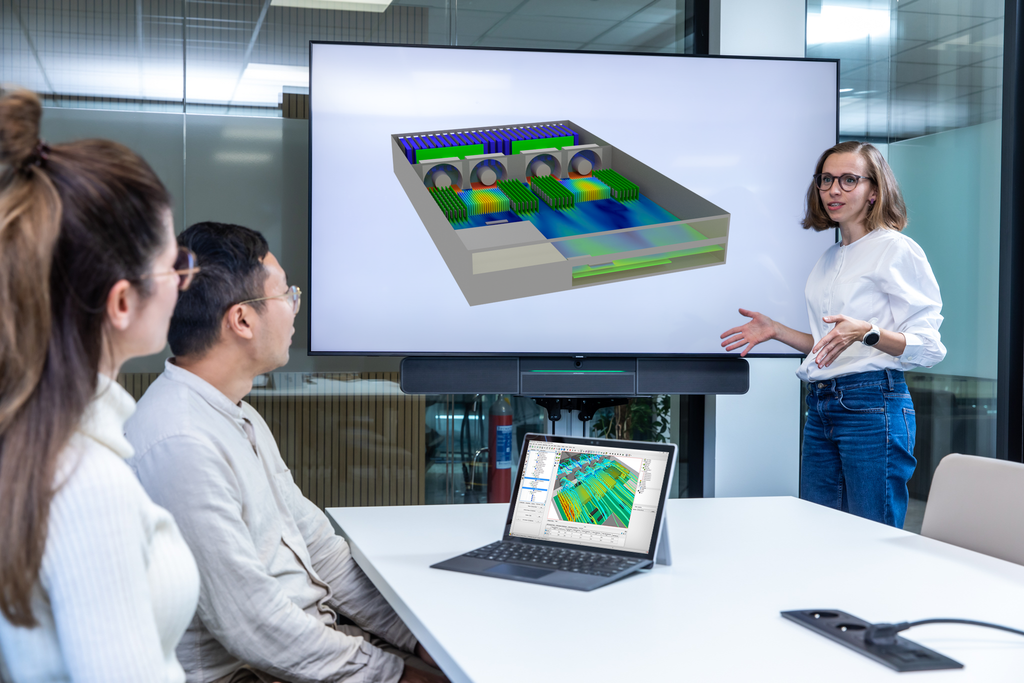
There is no real substitute for physics simulation. Models have steadily become more accurate, reducing the need for physical testing. The challenge, however, is that simulations take time.
“Products have become much more complex,” says Ravi Shankar, director of solutions and technical marketing at Siemens. “There are multiple physics that need to be considered in product development, and simulation itself is often becoming a bottleneck.”
Much of that friction comes from model preparation. Engineers must clean up CAD geometry and generate meshes before analysis can even begin, making it difficult to run the multiple iterations needed to explore design alternatives.
“If your tools are too slow to support the decision-making speed that you need, then teams just move on,” says Shankar.
Engineers are left to rely on intuition or partial data, deferring simulation to the end of the cycle as a final validation check. When unexpected issues surface that late, the result is costly rework and project delays.
Bringing simulation into those early design choices takes three connected technologies: digital twins, AI and high-performance computing.
The technologies moving simulation forward
A digital twin serves as a single closed-loop representation for assessing various aspects of product development. It evolves over time, maintaining traceability to the source. At Siemens, the comprehensive digital twin lets thermal and structural teams work from variants of that same core design—so when changes occur, their impact cascades to affected parties. This avoids the familiar design-review headache of finding analysis was completed on an older product version.
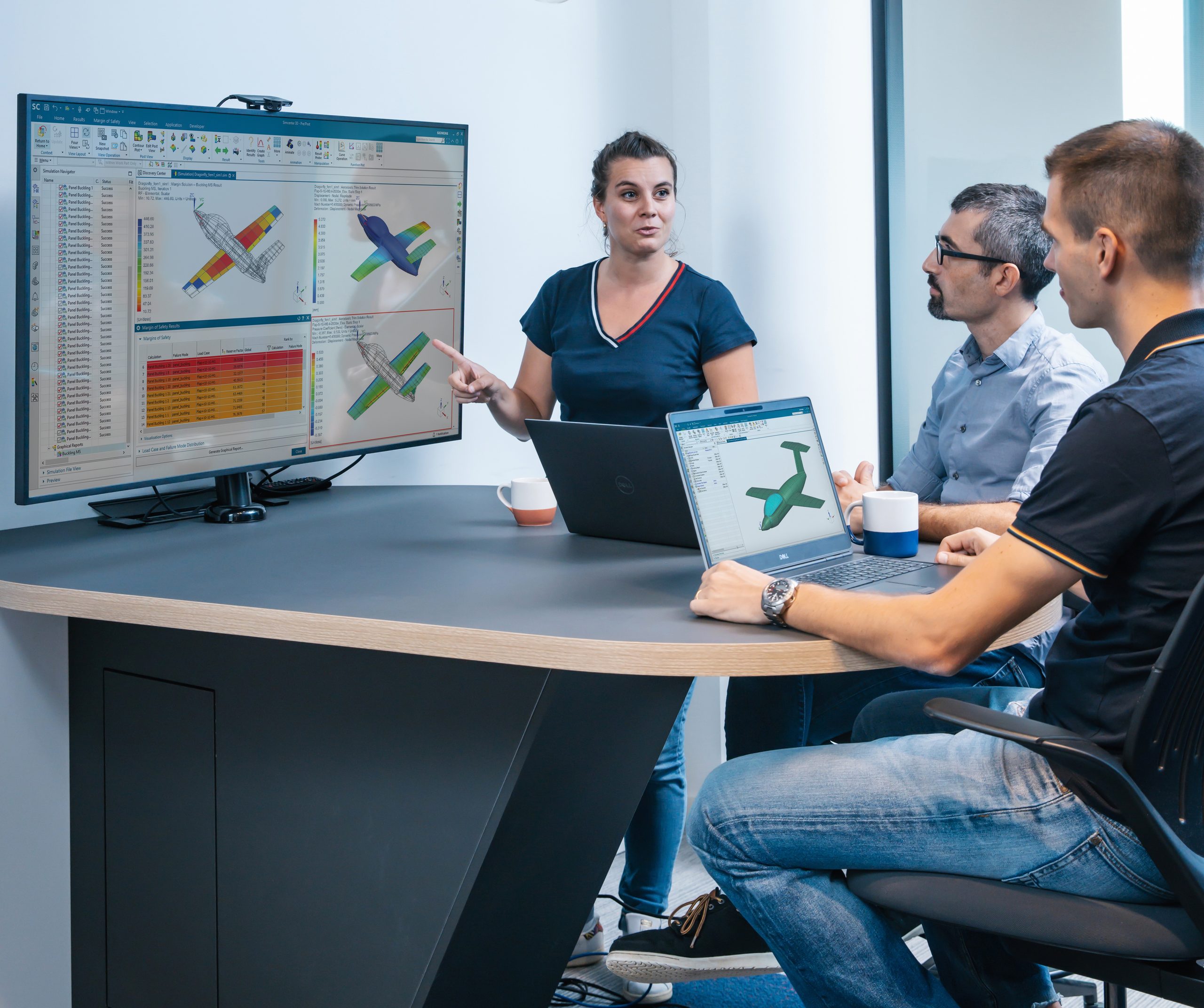
AI then speeds up the development process by predicting how new designs will perform. Siemens’ Simcenter PhysicsAI, a geometric deep learning technology, uses historical simulation data and CAD or meshed geometries to build an inference model. Given a new geometry, it can quickly provide full-field results across different types of physics.
“The potential here is huge,” says Shankar. “You’ve gone from what used to take multiple days to run a single simulation to being able to run thousands of simulations within a few hours. What that means is that now you can fully explore the design space.”
High-performance computing (HPC) provides the muscle needed to run complex multiphysics simulations and train AI models rapidly.
“The combination of AI, simulation and HPC is the crux of the change in product development,” Shankar says. “Those three technologies coming together are what enables a transformation of how engineering itself is going to get done in the future.”
Simcenter: Faster, smarter, trusted
Siemens’ simulation software, Simcenter, draws on these advances to move analysis to the front of the design cycle. Its faster engines include GPUs for running simulations, and new solver methods. Simcenter Simsolid allows engineers to feed in CAD geometry—whether single components or full assemblies—and obtain results in minutes without ever building a mesh.
“With Siemens, we’re integrating this technology into our Designcenter application,” says Shankar. “When designers are coming up with concepts, they want to get a quick assessment of whether something is going to work. They can use the built-in capabilities of Simcenter Simsolid to arrive at those results without having to wait for an analysis team to do the analysis.”
Speeding up the solution process is only part of the work; smarter execution helps engineers navigate multi-step engineering workflows that can often be tedious.
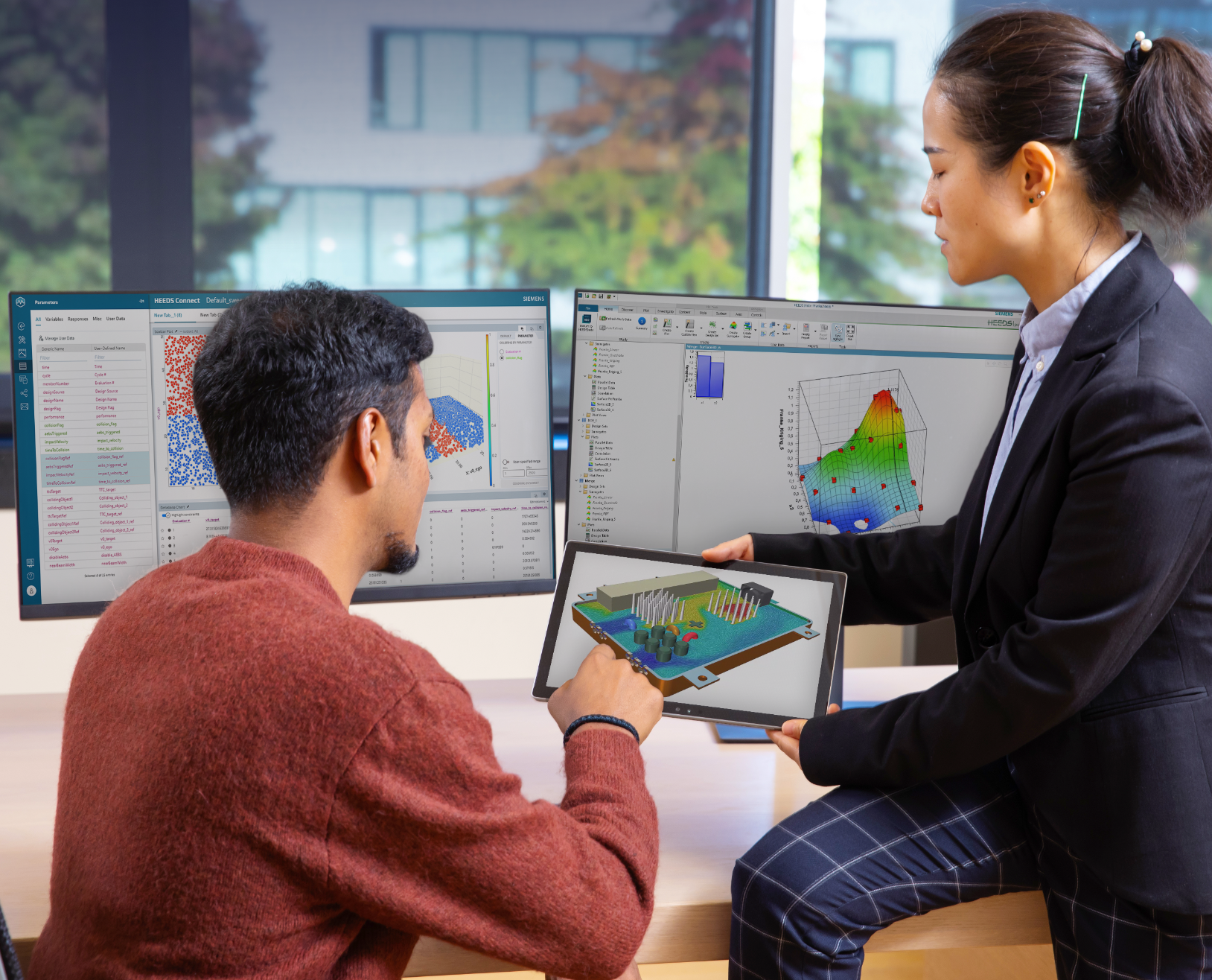
“We’re using a lot of AI-based methods across the workflow,” says Shankar. “For example, AI-powered copilots embedded in the product can guide users through specific steps, while agents can help automate and accelerate broader workflows. Together these capabilities can dramatically improve engineering productivity.”
These emerging agentic workflows enable engineers to request tasks in natural language. Working in the background, agents can execute tasks across different Simcenter applications, evaluate whether the results meet requirements, and adjust when necessary.
“All of this is irrelevant if customers can’t really trust the outcomes from their simulations and their AI workflows,” Shankar says. “Trust comes from data. You need a lot of data to train the AI models. Companies also want to make sure that their data is used appropriately internally.”
To build that trust, Siemens allows companies to train AI models using their proprietary data on a managed platform. There’s full traceability into how an inference model was created, what changes to the core model might affect it, and how those models are deployed to the rest of the organization.
Siemens Xcelerator provides the broader environment for teams to work together.
“What makes our portfolio stand out for customers is that we don’t offer simulation toolsets in isolation,” adds Shankar. “We fully integrate them into mechanical CAD, ECAD, data management, manufacturing and operations workflows, so simulation becomes part of the broader digital thread.”
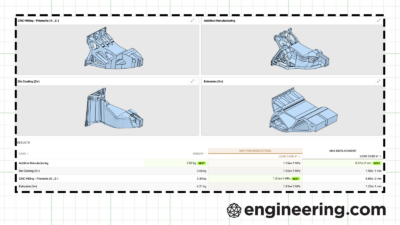
A Rolls-Royce engine intercase redesign shows what this speed can mean in practice. Training the AI model required 90 design runs, which would have taken about 270 hours using traditional methods. Simcenter Simsolid completed them in roughly 20 hours. Simcenter PhysicsAI then evaluated new designs in seconds, helping the team arrive at a part that was 14% lighter and 5% stiffer.
An open architecture
Simcenter is designed to accept CAD data from multiple sources, support third-party solvers alongside Siemens’ own, and connect with tools using standard exchange formats.
“Openness is a very important aspect of the way Siemens builds our products,” says Shankar. “Our efforts are always to make sure that we are not introducing anything that’s closed or disruptive to an existing workflow.”
The convergence of AI, HPC and closed-loop digital twins isn’t just about faster software—it’s about changing when decisions get made. When simulation operates as a front-end design engine, teams can explore ideas while they still have the flexibility to act on them.
To learn more, visit Siemens.