From luxury watches to GPU cold plates, engineers are finding real value in surrogate models—when the cost-benefit tradeoff makes sense.
Surrogate models show the exciting impact AI can have on simulation.
By applying machine learning to data derived from physical tests, lab experiments, and finite element analyses, the resulting AI models can predict how a product or system might behave in response to input parameter changes. Once validated, these so-called surrogate models can be a substitute for the computationally costly 3D simulation.
However, developing a surrogate model using machine learning involves a tradeoff analysis: weighing the desired model accuracy against the amount of data available, the annotation and labeling workload involved, and the time and computation required.
To understand those tradeoffs and the potential benefits of surrogate models, we’ll look at how three engineering teams used this approach for wildly different design problems: luxury watches, valves, and GPU cold plates.
The music of time
The sound from a luxury watch is not random. It’s engineered down to the exact frequency to convey the sense of class, elegance, and lifestyle associated with the target buyers. Roland Rozsnyo, a researcher and lecturer at the Geneva School of Landscape, Engineering and Architecture, focuses on the way the hammer strikes the watch’s gong to make the sound, a function of the minute repeater. He uses Comsol Multiphysics software to fine-tune the acoustics.
“The movement of the hammer is mechanical, multibody dynamics,” explained Rozsnyo. “But when the hammer hits the gong, elastic waves propagate through the solid structure, which then radiates acoustic waves into the surrounding air.”
For years, watchmakers have done psychoacoustic studies to identify the frequency range preferred by luxury watch buyers, according to Rozsnyo. But producing a sound in that frequency range is a challenge. The acoustics are influenced by the distance between the wrist and the watch, the hammer’s striking angle and position, the material of the gong, and the geometry and thickness of the membranes, among other things.
“To find the right combination of parameters, we use an optimization algorithm, which requires many evaluations of the model as it searches for the optimum. So even with just ten parameters, that can become computationally very expensive,” said Rozsnyo. “That’s why we looked into the use of an AI-trained surrogate model.”
For the first trial, Rozsnyo’s research team concentrated on two parameters only: the hammer position and the frequency. “Using the 3D model of a standard watch, we performed the optimization first using the direct BEM [boundary element method] model, then using the DNN [deep neural network] surrogate model. The speed gain with the surrogate model is about 60 times,” Rozsnyo said. “The optimum striking angles were 50.37° with the BEM model and 52.70° with the DNN surrogate. These values are sufficiently close to show that the surrogate model can provide a good optimization result.”
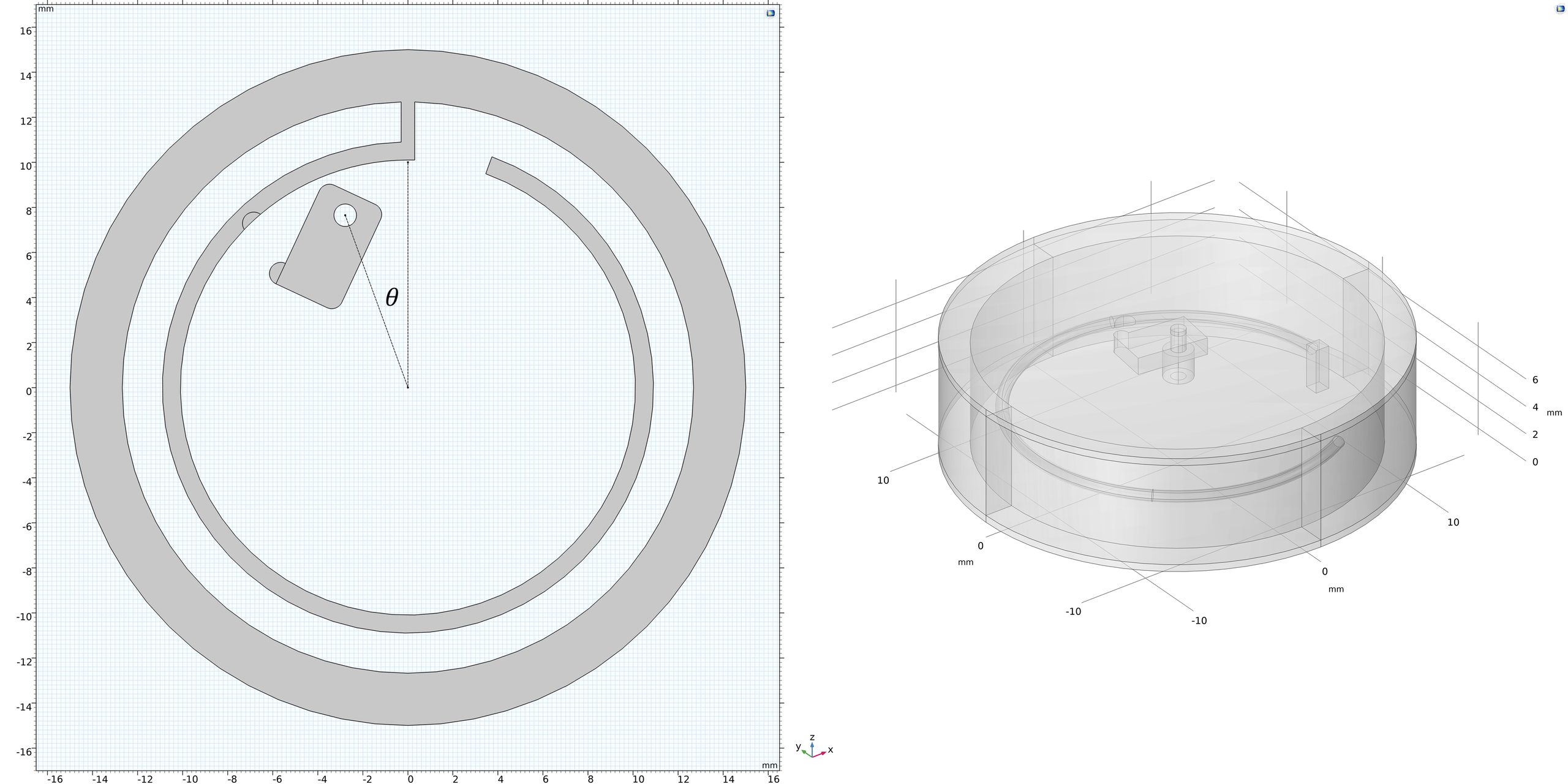
Rozsnyo credits the surrogate model’s accuracy to the reliable acoustic-structural model in Comsol Multiphysics software. With such a model, it’s possible to generate enough simulation data covering a wide range of parameters for machine learning. But the amount of time required to develop the surrogate model should not be underestimated.
“We have a pretty powerful machine with 2.3 TB of RAM. But even with that, it took four days to generate enough data. We used 80% of the generated data for AI training, 20% for validation,” Rozsnyo said. This is in line with industry best practice to ensure the validation is not influenced by the training dataset. The entire machine learning process took 20 days.
Comsol points out in its training guide for machine learning that “it is necessary to find a balance between the required model accuracy and the time it takes to generate more data points.” The software maker recommends Latin hypercube sampling to efficiently sample the parameter space when generating training data. Comsol also allows users to employ a mix of experimental data and simulation data in the process.
Rozsnyo and his research team are now looking at cooling optimization of bimetallic alloys. “It’s a very complex problem with phase changes, involving thermomechanical solvers. It takes a lot of time and computation to optimize. So we want to see if we can reduce the time with a surrogate model,” said Rozsnyo. Because a well-trained surrogate model lets you bypass the computationally expensive full 3D model for every new evaluation, “you might even be able to run it as an app on an iPhone,” he added.
Going with the flow
Sandip Jadhav cofounded the Centre for Computational Technologies, headquartered in Pune, India. Ten years ago, he and his business partner Vijay Shankar Mali launched SimulationHub, a subscription-based simulation service.
The Autonomous Valve CFD module, for example, allows users to upload their valve’s topology and get performance curves of the flow coefficients, Cv and Kv, within minutes. Since the solution runs in SimulationHub’s AWS EC2 infrastructure in the cloud, the user’s local computer’s resources remain untouched. They can continue to work on design and modeling tasks while a CFD job is in progress.
Still, performing a CFD simulation of a valve typically takes a couple of hours, according to Jadhav. However, he says that with an AI-trained surrogate model “the time is reduced to about 10 to 20 seconds.”
SimulationHub trained its surrogate model on data from 20,000 valve simulations, accumulated over the company’s ten years of operation. The goal, Jadhav explained, is not for users to replace the CFD model with the surrogate model, but to use it for quick iterations.
“We recommend the surrogate model for upfront design iterations,” Jadhav said. “With this approach, users can reduce the number of CFD runs.”
The AI-trained surrogate model runs on the user’s uploaded CAD model and directly outputs the Cv curve. “It skips the meshing and post-processing,” Jadhav said.
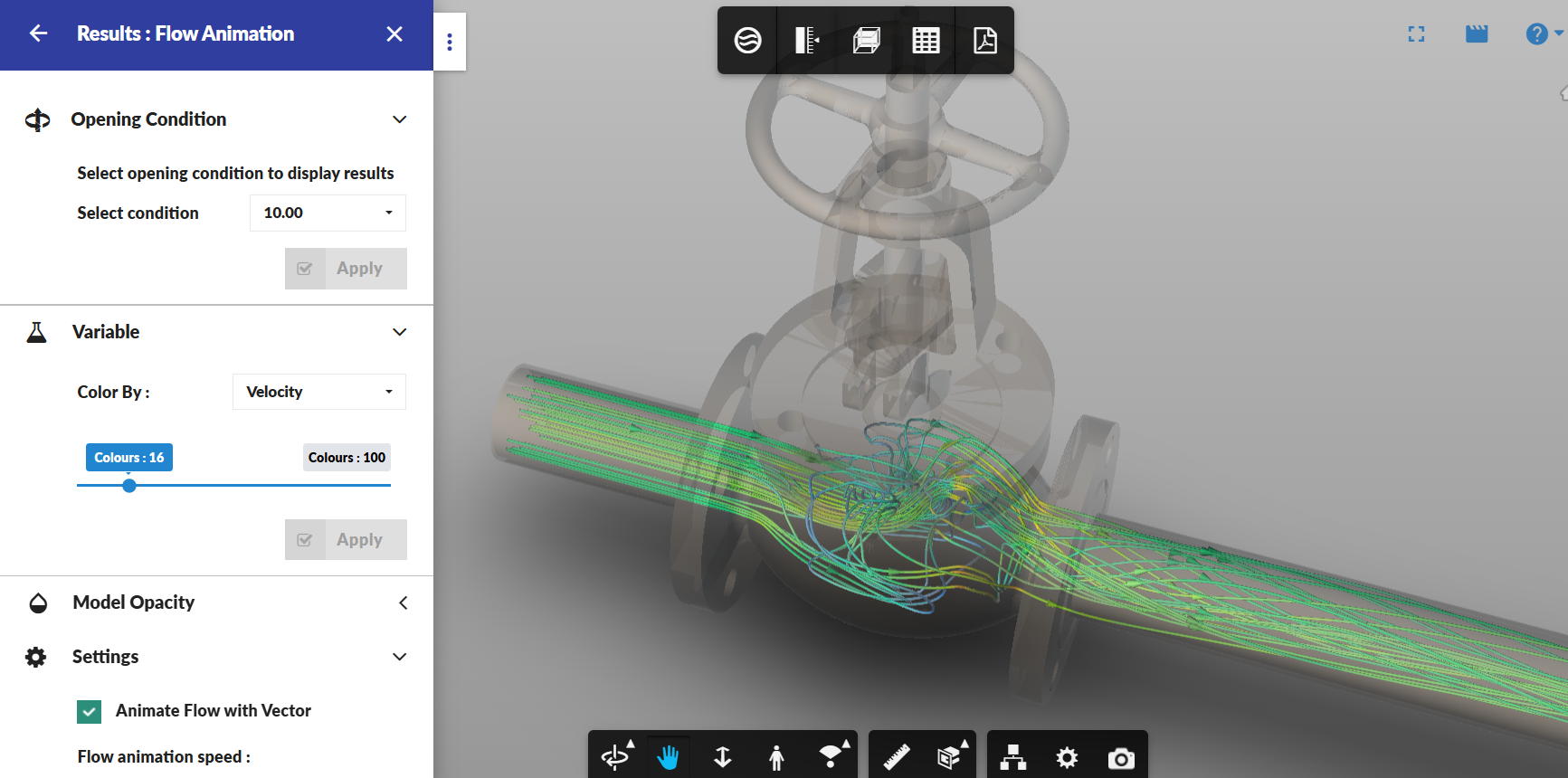
Currently, the engineer conceives and designs a valve, then tests its viability using physical mockups and digital simulations. But Jadhav envisions AI reversing the process in the future. “With generative AI, you might be able to specify the desired Cv, then ask the software to recommend some butterfly valve designs, for example,” he said.
Jadhav also believes, with the use of AI-trained models, complex multiphysics simulation and root-cause analysis will become more accessible. “With surrogate models, even departments without a simulation engineer can test out ideas. This will make simulation omnipresent throughout product development,” he said.
SimulationHub uses OpenFOAM, an open-source CFD solver, as its simulation engine. The AI training and surrogate model development were done using NavPack from Navasto, acquired by Autodesk in October 2024.
“The training took several days on a machine equipped with Nvidia GPUs,” Jadhav recalled. In their first attempt, the team at SimulationHub tried to develop a surrogate model that could account for many different valve types, but “the AI model got confused,” Jadhav said, with a chuckle. “So we decided to develop a surrogate model for each standard valve type,” such as triple offset butterfly, swing check, plug, and axial flow, among others.
As a data-driven simulation service provider, SimulationHub has an advantage in AI training. “All the inputs are perfectly tagged data, so we didn’t need manual annotation for AI training,” said Jadhav. For those with less organized archival data, annotating and labeling the data may be the first step.
Nature-inspired cold plate design
Felipe Mercado, principal engineer at Ansys, part of Synopsys, specializes in physics-based simulation and AI/ML integration into engineering workflows. He believes a well-structured data strategy is the foundation for reliable AI models.
Companies often have good records of successful simulations, but few records of failed simulations. However, “failed simulations can be valuable for AI model training when they are technically valid and correctly labeled,” Mercado said.
Input parameters such as loads and materials are usually clearly marked in the archival simulation data, since they are part of the scenarios studied. “But sometimes they don’t capture mesh discretization errors or uncertainty estimates. These metrics allow you to identify under-converged simulation samples that can contaminate the AI training data,” Mercado said.
In the data ingestion phase, organizations may automate tasks, such as duplicate identification, metadata extraction, and data-format standardization, to improve data quality and consistency. Ansys software integrates Python scripting with its PyAnsys libraries, allowing users to employ scripts to automate parts of data preparation and model-training pipelines.
“Human oversight is important,” said Mercado. “You need experienced engineers to tell you what a hotspot in the FEA result means. You also need them to identify false positives and outliers in your AI model’s predictions, such as hotspots appearing in regions where the underlying physics or prior validated simulations would not normally support them.” This could be a sign that the AI model’s prediction needs to be reexamined or corroborated with other methods.
Mercado recommends evaluating the cost-benefit ratio of developing a surrogate model. “If the scenario can be solved in a physics simulation within a few minutes, or if you deal with it infrequently, spending time and resources to train, validate, and maintain a surrogate model doesn’t make sense,” he pointed out.
Surrogate models can be parametric or geometric, Mercado explained. In general, a parametric surrogate model can calculate and make predictions based on numerical input parameters such as pressure, liquid inlet/outlet diameter, and valve length. A geometric surrogate model is more appropriate when the design variation is driven by shape or topology changes that cannot be captured well by a small set of scalar parameters.
“The choice of surrogate model affects the kind of design exploration engineers can perform. Parametric models are well suited to traditional sensitivity studies and optimization around known variables, while geometry-based methods can help explore broader shape families when topology itself is part of the design question,” said Mercado.
Moreover, surrogate models can accelerate generative design—by enabling engineers to explore new design candidates that blend features from previous designs, as shown in Ansys’s new offering, GeomAI.
To demonstrate how it works, Ansys trained a GeomAI model to generate designs of a GPU cold plate, a metal heat exchanger that is part of a liquid-cooling system used to regulate the temperature of GPU processor cores.
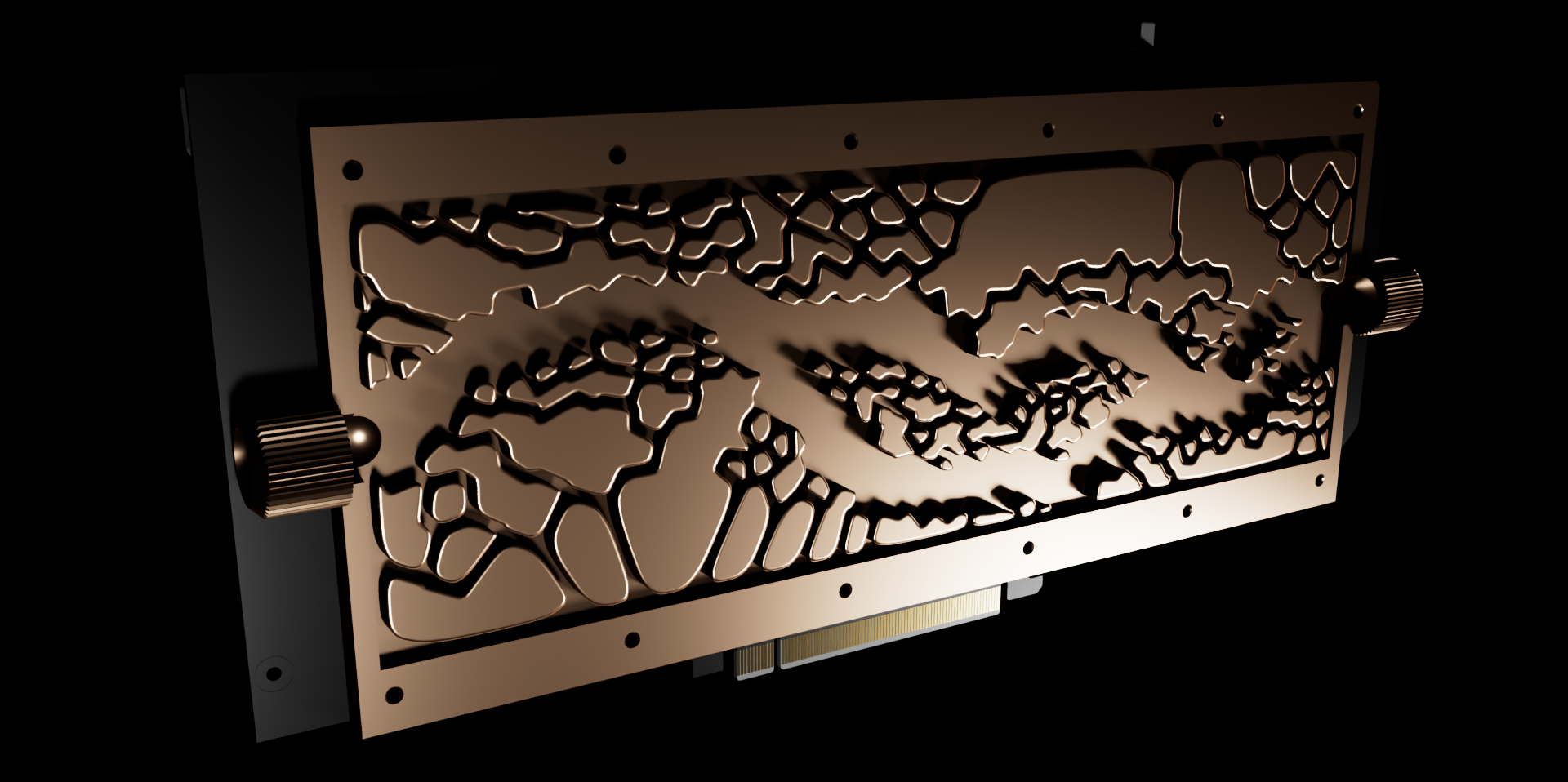
In the published case study, Ansys wrote, “The task was to design a GPU cold plate for roughly 650 W of heat while minimizing both operating temperature and mass while keeping the pressure drop constant … GeomAI was used to show a new approach to optimization: searching between different concepts represented by a single CAD model.”
For the project, Ansys engineers used automatically generated training data based on nature, such as branch patterns and river networks. This led to an algorithm that produced organic-looking topologies.
“The result is a practical way to move beyond incremental parameter sweeps and into geometry exploration that can handle different topologies while staying connected to simulation-driven product development,” reads the case study.
Surrogate models will likely become an integral part of simulation workflows, partly driven by manufacturers’ race against time to bring new products to market. As shown in the cases above, successful deployment depends on identifying the right use case and a well-conceived data strategy.