The TruLaser Weld 3000 supports CAD-based programming, AI-assisted path correction and welding of steel and aluminum components.
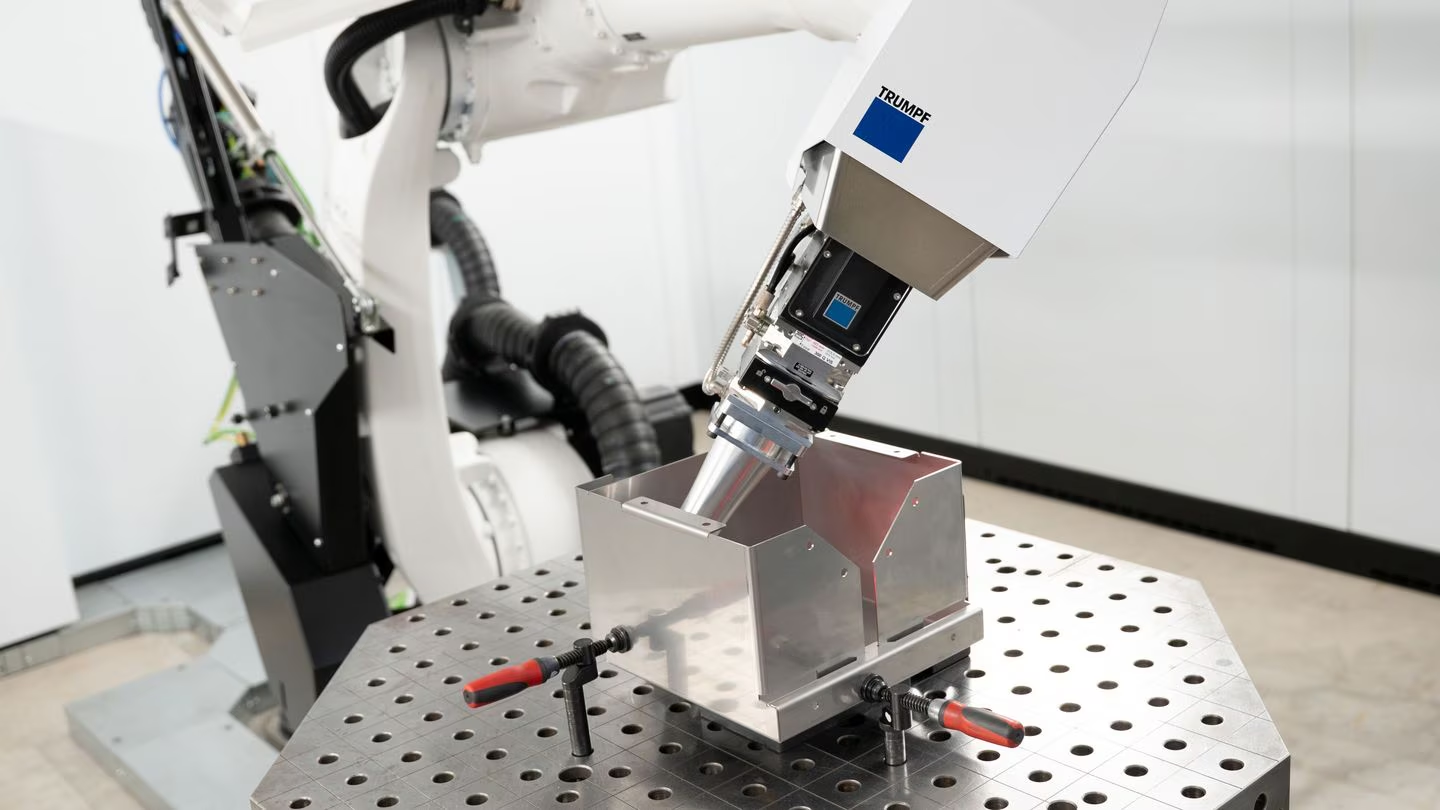
At EuroBLECH 2026, TRUMPF is introducing the TruLaser Weld 3000, a robotic laser welding cell with AI-assisted programming and a compact enclosure.
Programming from CAD data
The TruLaser Weld 3000 can be programmed at the machine or offline using TruTops Weld software. Offline programming allows operators to create programs for new components while the machine remains in production. Programs generated from CAD data can be adjusted with the TeachLine Touch function, which allows operators to reposition weld points through the machine’s touchscreen.
The TeachLine AI function uses an AI-based process to detect deviations in weld points and adjust the robot path based on the actual component configuration. According to TRUMPF, the functions can reduce programming and setup time by up to 50 percent. The system is also designed for operation by employees with different levels of programming experience.
Welding optics and process functions
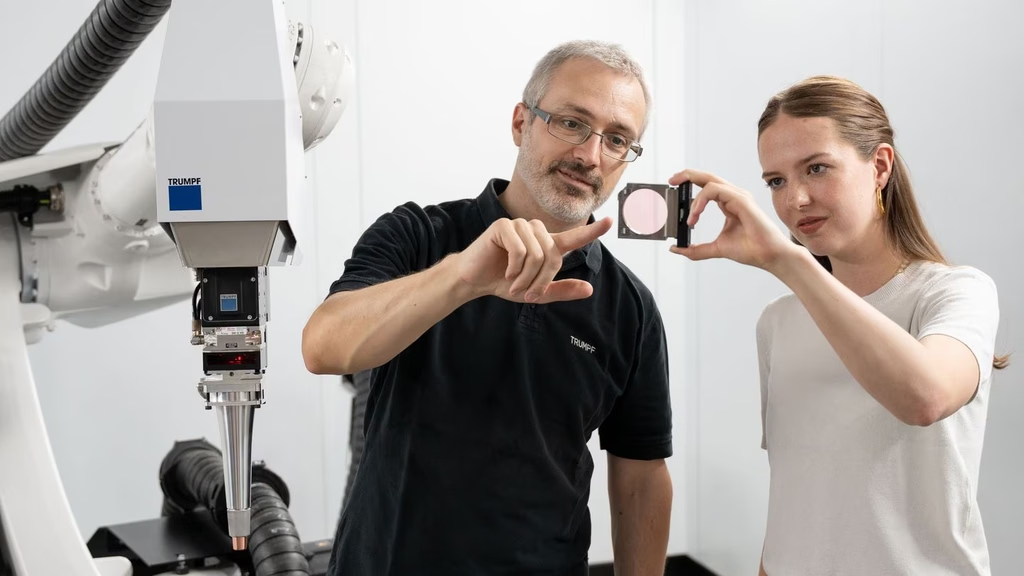
The TruLaser Weld 3000 uses welding optics that are approximately 40 percent smaller than previous versions. The smaller optics allow the robot to access areas such as the interiors of deep housings, crates and boxes.
The system includes BrightLine Scan, which combines a high-frequency scanner with motorized focus adjustment. The function supports gap bridging of up to 0.4 mm and wider welds for compensating for component tolerances. BrightLine Weld distributes laser power between inner and outer cores in the laser light cable to reduce spatter during welding, including deep-welding applications.
For gaps of up to approximately 1.5 mm or materials requiring filler metal, FusionLine combines laser welding with filler wire to deposit additional material.
Compact enclosure and component handling
The TruLaser Weld 3000 has a protective enclosure measuring 3.65 × 3.65 m. This is approximately 24 percent smaller than the smallest version of the TruLaser Weld 5000. The cell can process pallet-sized components using a KUKA Iontec robot with a reach of 2,100 mm.
Component positioning options include a conventional welding table, a tilt-rotate positioner and a rotary changer. The rotary changer allows components to be loaded and unloaded while welding continues in the other work area. With 3 kW or 4 kW of laser power, the TruLaser Weld 3000 can weld stainless steel and structural steel up to 8 mm thick. It can also weld aluminum up to 6 mm thick. Applications include equipment and plant engineering, sheet metal components for data centers, medical technology and kitchen and food-processing equipment.
For more information, visit trumpf.com.