The process uses digital twins and synthetic defect images to prepare AOI systems before physical boards enter production.
Siemens announced a collaboration with NVIDIA to develop adaptive AI-supported manufacturing capabilities that combine industrial software, Siemens’ Digital Twin technology and NVIDIA Cosmos. The work focuses on production planning, inspection preparation and process optimization.
The collaboration combines Siemens Teamcenter product lifecycle management (PLM) software and Process Preparation X with NVIDIA Cosmos to create an AI-supported workflow for printed circuit board (PCB) inspection. The workflow is designed to help electronics manufacturers prepare and optimize automated optical inspection (AOI) processes before production begins.
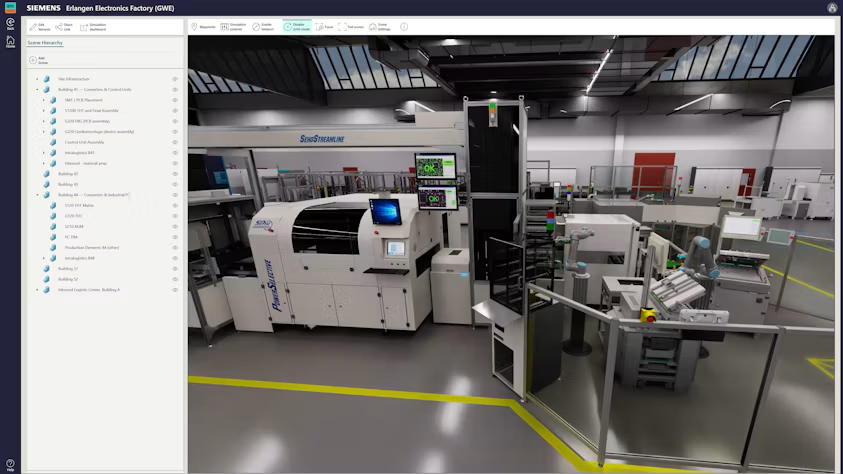
The solution is being demonstrated at the Siemens Electronics Factory in Erlangen, Germany. The facility serves as Siemens’ Customer Zero for adaptive AI-supported production and is evaluating production changes that may occur three to five times per week.
Virtual preparation for PCB inspection
Introducing a new product or product variant traditionally requires a physical prototype before AOI processes can be prepared and trained for quality control. The new workflow transfers part of this preparation to a virtual environment.
Teamcenter provides PCB design, bill of materials and component information. Process Preparation X validates, standardizes and combines this information into a digital twin of the printed circuit board assembly (PCBA). The digital twin provides product and manufacturing information for preparing inspection before the first physical board enters production.
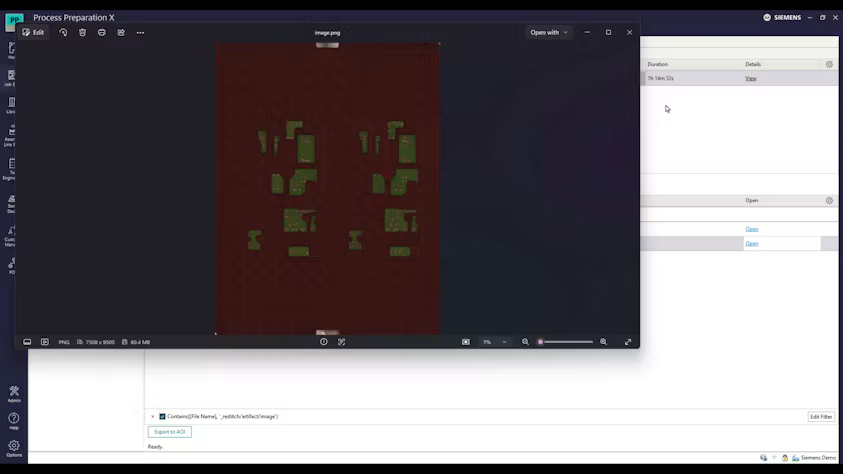
The digital twin of the reference board, also known as a golden board, is used with NVIDIA Cosmos to create a photorealistic virtual version and synthetic samples representing acceptable and defective production conditions. Siemens uses NVIDIA Cosmos Data Factory to generate synthetic circuit board defect images for calibrating inspection equipment before physical boards are available.
The workflow also supports secondary inspection during production. When an AOI system identifies a possible defect, the secondary inspection capability analyzes the condition and helps determine whether it is an actual defect or a false call. The combined workflow covers virtual AOI preparation, calibration and inspection support after production starts.
Customer Zero at Siemens Electronics Factory in Erlangen
The Siemens Electronics Factory in Erlangen is serving as Customer Zero for the collaboration and related work on adaptive, autonomous and AI-supported production. The facility provides the production environment, manufacturing use case and subject-matter expertise for a high-mix operation with changing processes.
The project targets up to an 85% reduction in manual engineering effort for AOI program generation, a 40% reduction in false calls and an improvement of more than 5% in first-pass yield.
For manufacturers, the workflow is intended to support earlier inspection preparation, reduce manual engineering and verification work, reduce reliance on physical samples and improve inspection calibration. It also illustrates how digital twins and industrial AI can connect product engineering data with inspection processes across virtual and physical production stages.
For more information, visit siemens.com.