The update adds an MCP Server, Electric Motor Module and Application Builder support for macOS and Linux.
COMSOL has announced the planned release of COMSOL Multiphysics version 2027 for later this fall. The release will add COMSOL Systems for system-level models that connect with 1D, 2D and 3D multiphysics models; the COMSOL MCP Server for interaction with external AI agents; the Electric Motor Module for motor and generator simulations; and Application Builder support for macOS and Linux.
Version 2027 will also include a time-periodic solver for simulations in plasma, electromagnetics and MEMS. Other updates cover solvers, geometry, meshing and productivity features.
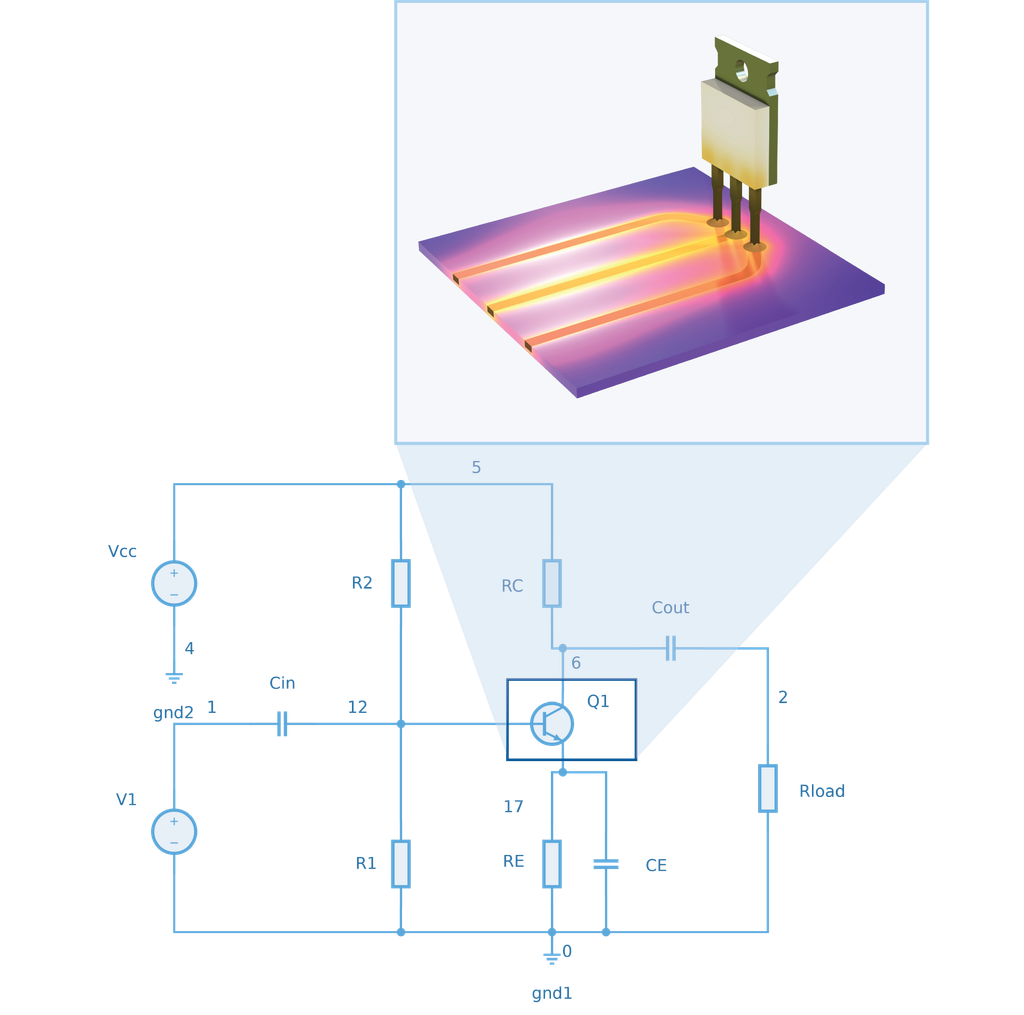
An electrical circuit model created in COMSOL Systems coupled to a detailed 3D multiphysics model created in COMSOL Multiphysics, enabling circuit-level and component-level physics to be analyzed together.
COMSOL Systems for system-level modeling
COMSOL Systems will provide an environment for modeling complete systems while retaining access to detailed multiphysics models. Users will be able to create electrical circuit diagrams, process flowsheets and equation-based system models using a library of nearly 5,000 components.
Blocks can represent electrical devices, process units, custom components or complete multiphysics models. Users can connect these blocks to create systems and add detailed models where local physical effects require additional analysis. This approach supports the study of how component-level behavior affects overall system performance.
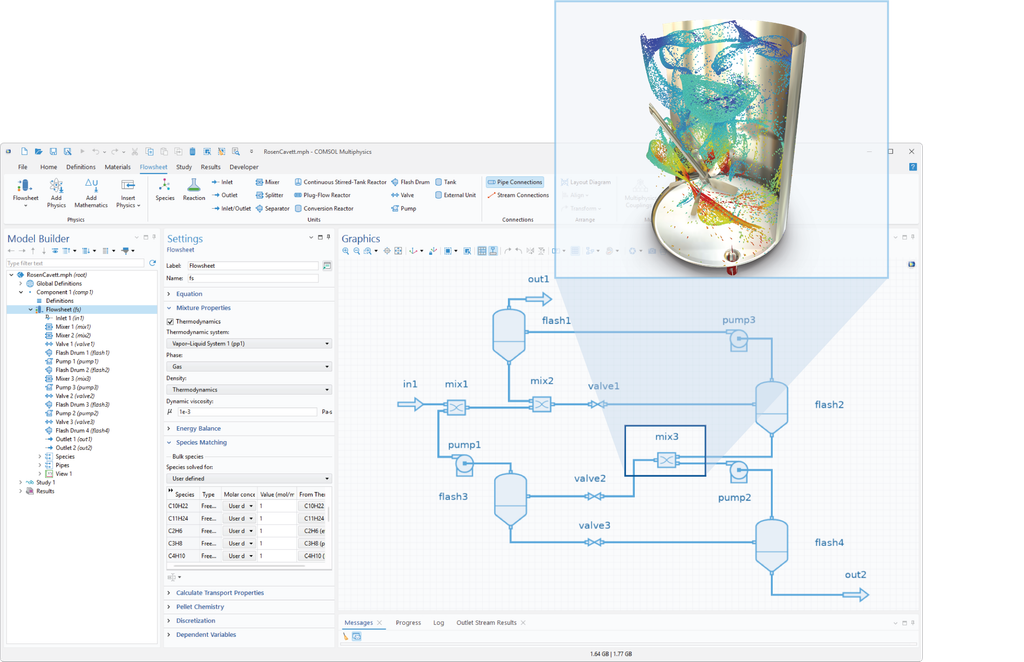
The Model Builder with the Flowsheet interface highlighted, the corresponding Settings window, and a flowsheet in the Graphics window coupled to a detailed 3D multiphysics model of a continuous mixer, providing a direct link between system-level process behavior and the detailed physics of an individual process unit.
AI-assisted simulation through agent workflows
The previous version of COMSOL Multiphysics included an optional Chatbot window for modeling and programming guidance. Version 2027 will add the COMSOL MCP Server, which uses the Model Context Protocol (MCP) to allow external AI agents to interact with COMSOL Multiphysics.
Through the COMSOL API, an agent can create or modify models, run simulations, inspect results and determine subsequent actions. Users can review and adjust the work in the COMSOL Desktop environment.
Electric Motor Module
The Electric Motor Module provides tools for modeling electric motors and generators in COMSOL Multiphysics. Users can evaluate performance, operating ranges, losses, material effects, excitation circuits and faults in 2D and 3D models. The module also supports machine design optimization for performance, efficiency and material use.
Electric machine models can be coupled with heat transfer, structural mechanics, acoustics, fluid flow and electrical circuits. These couplings allow users to examine how multiple physical effects influence motor and generator operation.
Application Builder support for macOS and Linux
Version 2027 will extend Application Builder support to macOS and Linux, allowing users on these operating systems to create customized simulation tools.
Introduced in 2014, Application Builder allows simulation specialists to convert multiphysics models into applications with task-specific interfaces. These applications can request selected inputs, outputs and settings so that users with limited simulation experience can run analyses and evaluate results in offices, field locations or manufacturing facilities. Simulation apps can also provide interfaces for digital twin systems.
Updates across the product suite
Additional updates in version 2027 include:
- Expanded defeaturing tools for ECAD and planar geometry models
- Interior grid meshing and updates to swept meshing
- Fluid-structure interaction for high-Mach-number flow
- Edge-to-surface and point-to-surface mechanical contact
- An acoustic materials library with biomedical and porous material properties
- Faster pseudo-4D battery simulations
- Poroelasticity coupling for lithium-ion battery models
For more information, visit comsol.com.