NEDO-backed projects target laser control systems and low-noise amplifier modules for scaling neutral-atom, trapped-ion and superconducting computers.
Mitsubishi Electric Corporation announced that two of its research and development (R&D) projects have been selected through a public solicitation by Japan’s New Energy and Industrial Technology Development Organization (NEDO) for support under an initiative to advance quantum computing and other information technology in the post-5G era.
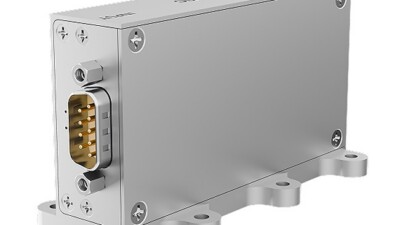
The NEDO project is officially known as the Research and Development Project to Strengthen Post-5G Information and Communication System Infrastructure (Accelerating the Development and Demonstration of Next-Generation Quantum Computers to Solve Societal Issues). Following this selection, Mitsubishi Electric will launch its two projects aimed at scaling up quantum computers: 1) Research and Development of Multi-Qubit-Control Laser Systems and 2) Development of Ultra-Compact, Multi-Channel, Low-Noise Amplifier Modules for Large-Scale Superconducting Quantum Computers.
Quantum computers are next-generation technologies that are expected to revolutionize computing infrastructure by enabling larger-scale simulations and optimization than conventional computers in a wide range of fields, including medicine and drug discovery, finance, logistics and energy. R&D targeting practical applications is already underway, but full-scale industrial applications will require significantly improved processing capacity and computational accuracy to realize quantum computers with clear advantages over conventional computers. Qubits are fragile and highly susceptible to noise, so technologies that combine multiple qubits are needed to correct errors. Consequently, scaling quantum computers to the level of one million qubits will be a key challenge.
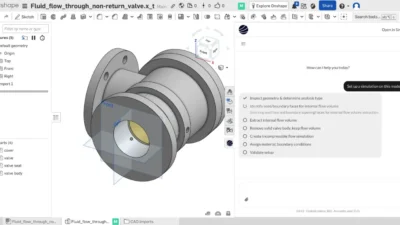
Specifically, Mitsubishi Electric will conduct R&D to scale up three types of quantum computers: neutral-atom,1 trapped-ion2 and superconducting.3 For neutral-atom and trapped-ion quantum computers, which use lasers to control neutral atoms and ions, Mitsubishi Electric aims to develop high-power, highly stable laser systems by leveraging its laser technologies for machine tools, and low-latency control technologies using logic devices such as a field-programmable gate array (FPGA). For superconducting quantum computers, which use microwaves to control qubits in cryogenic environments, Mitsubishi Electric will leverage its microwave IC technologies to develop ultra-compact, multi-channel, low-noise amplifier modules capable of operating in such environments. The aim is to scale up various types of quantum computers by enabling the control of larger numbers of neutral atoms, ions and superconducting qubits.
The two projects will promote technological validation within an industry-leading ecosystem involving collaboration with quantum-computing research institutions, including Japan’s National Institute of Advanced Industrial Science and Technology. By providing essential systems and components for scaling up multiple types of promising quantum-computing architectures, Mitsubishi Electric hopes to accelerate the realization of industrial applications using quantum computers.
For more information, visit mitsubishielectric.com.
- A quantum computer that uses neutral atoms, which have no electric charge, as qubits—the basic units of information in quantum computers. Such computers manipulate neutral atoms using laser light to process quantum information.
- A quantum computer that uses charged atoms, or ions, held in designated positions by magnetic fields.
- A quantum computer in which qubits composed of electrical circuits with superconducting elements are controlled using microwaves.