Software and research collaborations abound in industrial 3D printing.
We’re less than a week away from Formnext and the announcements are already piling up in my inbox. Unfortunately, most of those are still under embargo, so you’ll have to wait a bit longer to find out what’s coming from some of the biggest players in additive manufacturing (AM). Until then, there have been a number of other announcements that—while not major-industry-event-worthy—do merit some attention.
Here’s what’s been happening in the business of AM.
Additive Industries and Materialise launch new build processor
There’s a growing consensus among AM experts that software is more important to advancing industrial 3D printing than hardware. Case in point: the latest generation of Additive Industries’ build processor, developed in collaboration with Materialise. It’s designed to enhance the performance, productivity, and process control of MetalFab systems and, according to Additive Industries, it enables significantly faster preprocessing, greater control over scan strategies, and better handling of large and complex builds.
Additive Industries notes that the MetalFab 420K particularly benefits from the new build processor, with optimized laser load balancing, variable beam diameter control by vector type, ghost vectors for improved thermal stability, and advanced exposure strategy controls. According to the company, benchmark testing demonstrated a reduction in processing time from 46 minutes to 6 minutes compared to the Classic Build Processor 2.6. Moreover, the collaboration with Materialise means the new build processor is designed to integrate seamlessly with Materialise Magics.
“The introduction of the Next-Generation Build Processor represents another important step in our strategy to maximize productivity and process performance for our customers,” said Rik Bakker, Additive Industries CEO, in a press release. “By unlocking the advanced features developed for the MetalFab 420K platform we are enabling manufacturers to produce more parts, more efficiently, and with greater process consistency. Our collaboration with Materialise continues to deliver solutions that help customers make industrial additive manufacturing work, end to end.”
The software is available now for MetalFab customers.
BigRep returns to private ownership
BigRep, manufacturer of large-format industrial 3D printers, has returned to private ownership after two years as a publicly traded company. It’s now owned by three investment and holding firms: Koehler Invest, DeKrassny, and Hage Holding.
“Our initial public offering two years ago was based on the expectation of rapid market acceleration in additive manufacturing, an assumption that proved more optimistic than the market ultimately allowed,” said Thomas Janics-Jakomini, CEO of BigRep, in a press release. “Returning to private ownership allows us to refocus our resources on product development and growth.”
Despite the return to private ownership, BigRep is still reporting commercial momentum, with a reported revenue growth of 45 percent over the last year even as it transitioned away from public markets. This is partially attributed to the decision to manufacture all BigRep printers at the company’s own facility in Austria, which, the company claims, has resulted in significantly greater flexibility in production and delivery.
The latest 3D printer from BigRep is the ALTRA 670, a larger version of the ALTRA 280 that incorporates the same platform of servo motors, ball screw drive, and industrial control system but with an expanded build volume of 1200 x 700 x 800 mm. The build chamber and print bed can reach up to 140°C and the dual DSX extruders can heat up to 450°C to process polycarbonate and other engineering polymers.
The company has also signed several new resellers in recent months, including Alfex CNC in Australia, Phillips Corporation in Malaysia, and 3DXTECH in the United States.
Nikon SLM Solutions collaborates with PanOptimization on simulation
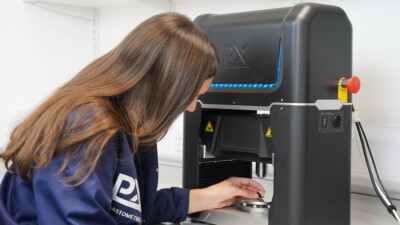
In another software-based partnership, Nikon SLM Solutions has teamed up with AM simulation provider PanOptimization to improve the use of the latter company’s PanX simulation software in the Nikon SLM Solutions build preparation workflow. That means a dedicated Nikon SLM Solutions integration that gives users the ability to load validated, parameter-specific templates for systems, materials, and process parameters.
According to Nikon SLM Solutions, this collaboration is an important step toward comprehensive thermal history control, enabling engineers to address the thermal behavior in the NXG XII 600 and the new MACHX systems both before and during the build.
“Integrating PanX directly into the standard Nikon workflow reduces redundant and error-prone simulation setup, and makes simulation easily accessible to design and manufacturing engineers,” said Erik Denlinger, co-founder and chief engineer of PanOptimization in a Nikon SLM Solutions press release.
Both companies will be exhibiting at Formnext next week: PanOptimization in Hall 11, Booth D49, Nikon SLM Solutions in Hall 12, Booth D119.
Velo3D and Sandia National Laboratories sign five-year agreement
Finally and most recently, Velo3D and Sandia National Laboratories have entered into a new cooperative research and development agreement (CRADA) to explore joint research in metal additive manufacturing over the next five years. While the CRADA itself is an umbrella agreement that leaves individual projects to be scoped out separately, Velo3D and Sandia are reportedly intending to explore part reliability, repeatability across machines and sites, materials development, and workforce development and technology transfer. In other words: pretty much every major stumbling block in AM.
“Sandia has decades of experience answering some of the nation’s most challenging problems, with a diverse set of capabilities and areas of expertise,” said Arun Jeldi, Velo3D CEO, in a press release. “Metal additive manufacturing research, in combination with Sandia’s other capabilities, offers a tremendous opportunity to advance the state of the technology, and working with its team gives us a rigorous research partner on the questions that matter most to programs moving parts into production at scale. This agreement is a starting point.”
The good news is that Velo3D says it will share findings from the collaboration as work progresses, hopefully resulting in a rising tide that lifts all AM boats.
Missed the last Additive business update? Don’t worry: we’ve got you covered.