Users can describe enclosure requirements, update designs with board changes and export models for physical prototype testing.
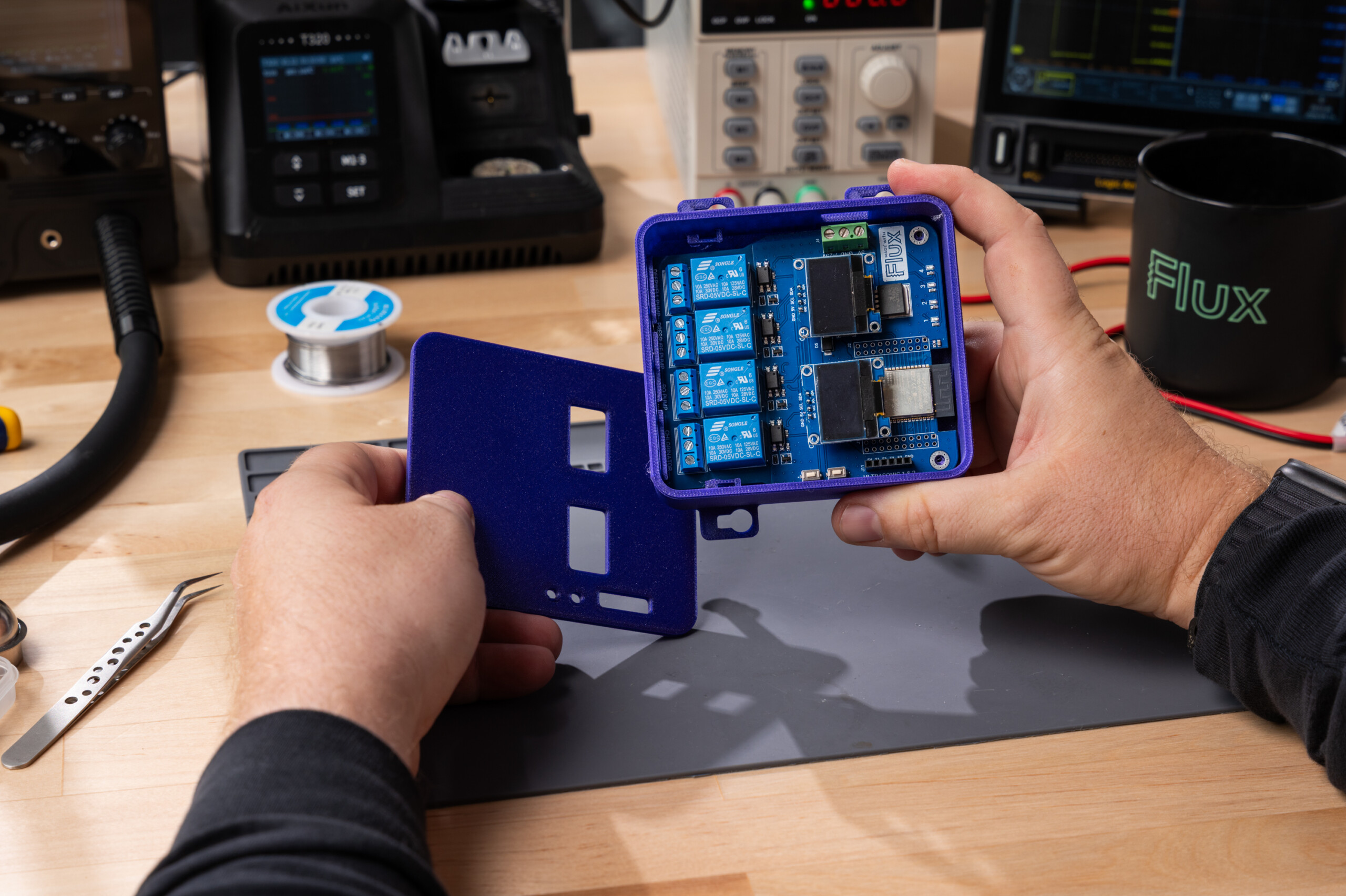
Flux has introduced AI-based tools for designing enclosures for printed circuit boards (PCBs). Users can describe an enclosure in the Flux chat window and generate a design based on the board’s geometry.
Previously, enclosure design often required support from a mechanical engineer or the use of mechanical computer-aided design (mCAD) software. Changes to the PCB could also require updates to the mechanical design.
The new capability connects PCB and enclosure design workflows and generates 3D-printable enclosure models based on the board geometry. The models can include latches, screw holes, mounting features, curved edges, vents and port cutouts. Users can preview the enclosure, request changes to its appearance or functionality and export the design in standard 3D-printing formats.
Flux updates the enclosure when users move or replace components on the PCB. The platform adjusts the enclosure and updates the manufacturing and assembly instructions based on the revised design.
The enclosures can be used to evaluate a PCB within its intended physical context before formal manufacturing.
The enclosure capability is available with all Flux plans.
For more information, visit flux.ai.