The group will assess aerospace simulation needs and develop a roadmap covering technical challenges, capabilities and research milestones.
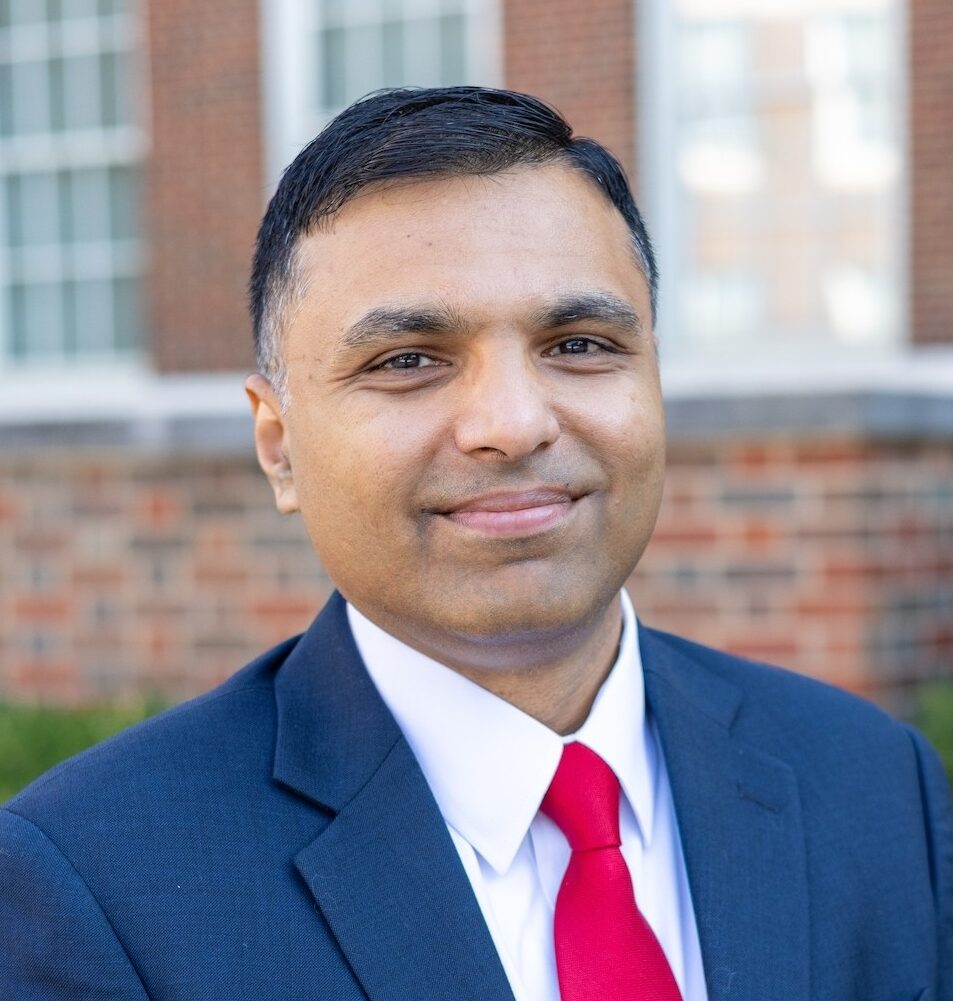
The American Institute of Aeronautics and Astronautics has formed the Computational Fluid Dynamics (CFD) Vision 2045 Team, a multi-institution working group tasked with defining the field’s capabilities and research priorities through 2045 in response to the aerospace industry’s changing requirements. Prashant Khare, Bradley Jones Professor and head of the Department of Aerospace Engineering at the University of Cincinnati, is leading the group.
Khare researches fluid dynamics at the University of Cincinnati’s Hypersonics Lab. His team studies fluid physics associated with supersonic and hypersonic flight, including conditions at speeds of up to five times the speed of sound. At these speeds, molecules can dissociate and recombine, producing a nonequilibrium flow state.
His research examines these effects and their implications for propulsion systems designed for high-speed flight and elevated temperatures. The team uses computer simulations to study the underlying fluid dynamics. Khare has also worked on projects with the U.S. Army and U.S. Navy since joining the University of Cincinnati’s College of Engineering and Applied Science in 2017.
In addition to leading the CFD Vision 2045 Team, Khare has been elected a Fellow of the American Society of Mechanical Engineers and the Royal Aeronautical Society. He is also an Associate Fellow of the AIAA.
The CFD Vision 2045 Team follows the CFD Vision 2030 study, which guided research and development priorities in computational fluid dynamics for the following decade. The new team includes experts from industry, government and academia who will assess the capabilities, challenges and research priorities required to advance the field over the next 20 years.
Khare is the only academic representative on the task force and chairs its activities. The group will compile its findings in a study covering required capabilities, major technical challenges and a research and technology roadmap with milestones for achieving the defined objectives.
For more information, visit uc.edu.