Overconfidence and old technology strangle modernization.
By Thiago Ribeiro, Global Head of Energy, Chemicals, and Infrastructure at Siemens Digital Industries Software
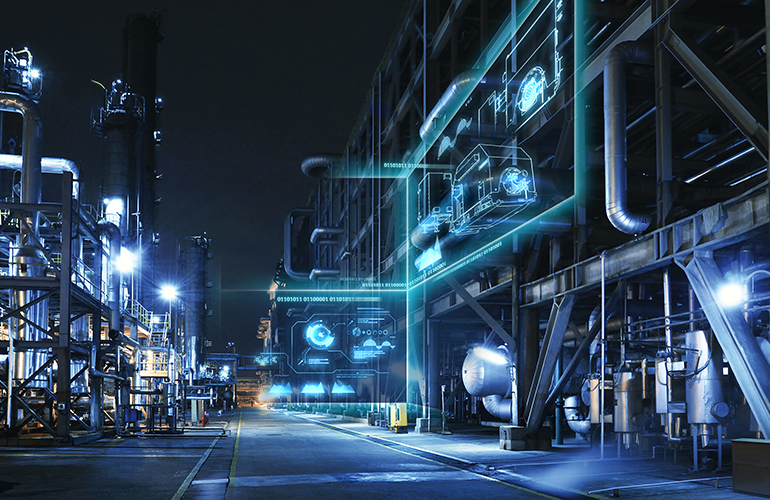
The oil and gas sector is hindered by legacy systems, overconfidence and stagnation. Now that the benefits of artificial intelligence (AI), digital twins and the industrial internet of things (IIoT) are mainstream, executives find themselves asking, “did we fall behind?” The answer is, yes.
I have come to this conclusion over my 15 years leading large-scale digital transformations for organizations in the energy, utilities, defense and public sectors. I am not the only one; MaKinsey Global Institute’s Industry Digitization Index ranks the oil and gas industry slower to adopt data-centric technologies compared to leaders like banking, media and tech.[1]
The sector can trace some modernization delays back to strict regulations and the volatile price of oil. Blame, however, also belongs to overconfident leadership. So, let’s see how we got here and how to catch up.
The oil and gas sector must act now
We use oil everywhere, not just energy and transportation. It’s needed to make fertilizers, food, chemicals, medications and plastics. The economy runs on oil and that will not change any time soon. Though this dependence shields the sector from disruption, it also breeds overconfidence.
During the pandemic we saw something bizarre: the price of oil going negative. The production of oil exceeded demand creating a surplus. Having run out of storage, some outlets were forced to pay others to take inventory off their hands. Then, Russia invaded Ukraine and prices shot up. Now, with more geopolitical crises in oil producing regions, we again see the chance of record high prices. But, having gone into the negatives, the recent price cycle proves there is a reality where oil and gas companies face financial strife. Therefore, they must act now, when margins are high, to prepare.
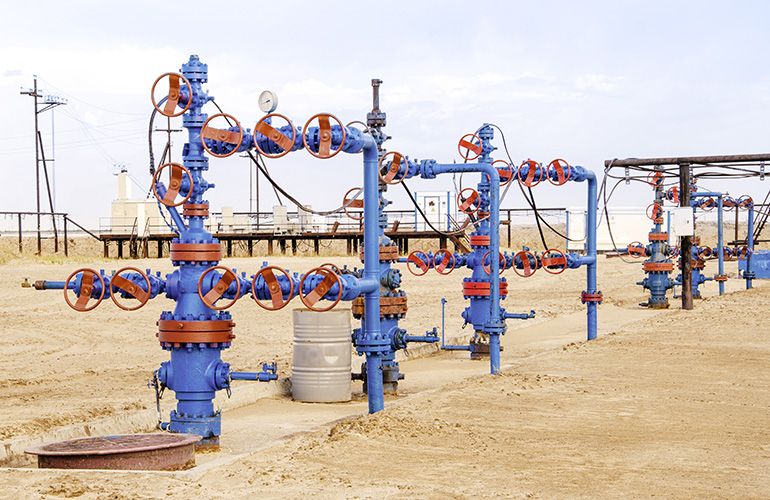
Imagine a scenario where oil prices drop below $70 a barrel. At this threshold leadership embraces resilience and operational excellence strategies. They restrict capital expenditures and reduce operational expenses to profit with thinner margins.
When prices and revenue are high, like today, leadership tends to become less concerned about operational excellence. This is a myopic strategy. Resilience and operational excellence are important in high times as they help prepare for the worst times.
So, how do executives embrace resilience and operational excellence in times of high profit? It is not by tightening budgets. It is by investing in data strategies and digitalization.
The oil and gas sector must learn from renewables
Consider the competition: renewable and nuclear power. They have limited time and resources to prove a project is profitable — be it solar, wind, geothermal, small modular reactors (SMRs) or fusion. They must make sure when they build a facility, or turn on a generator, that it works right the first time or risk running out of funds. They do this by embracing data strategies and digitalization from the start. In this way, renewables leapfrogged the oil and gas sector — technologically speaking.
Digital twins, AI, IIoT are all used by renewable energy companies to reduce risk. They help them understand, predict and optimize assets before they exist. By bringing simulation and data analysis into the design, construction and operation of complex systems, they can identify problems, predict maintenance, troubleshoot and assess operational changes risk-free. Only when the data predicts success and regulatory compliance do they implement real world changes.
The key is to transform data into insights, and that’s not an easy thing to do — especially during lower margins. These insights, however, become more precious during those hard times as they help to maintain regulatory compliance and profitability. So, oil and gas companies must digitalize their processes and build digital twins of their entire value chain when they have the money to do so.
[1]McKinsey & Company’s Global Energy & Materials Practice, Beyond the Supercycle: How Technology is Reshaping Resources, Feb 2017
About the Author:

Thiago Ribeiro, Global Head of Energy, Chemicals, and Infrastructure at Siemens Digital Industries Software
Thiago Ribeiro, PhD, has more than 15 years of experience leading digital transformation initiatives across complex industrial environments.
He currently serves as Global Head of Energy, Chemicals & Infrastructure at Siemens Digital Industries Software. His career includes senior leadership roles in portfolio management, strategic consulting, consultative sales, pre-sales, and software development, providing him with a comprehensive, end-to-end perspective on how technology, business strategy, and execution converge to deliver impact.
Sponsored Content by Siemens Digital Industries